
Top AI Tools for Packaging Design: 2026 Edition
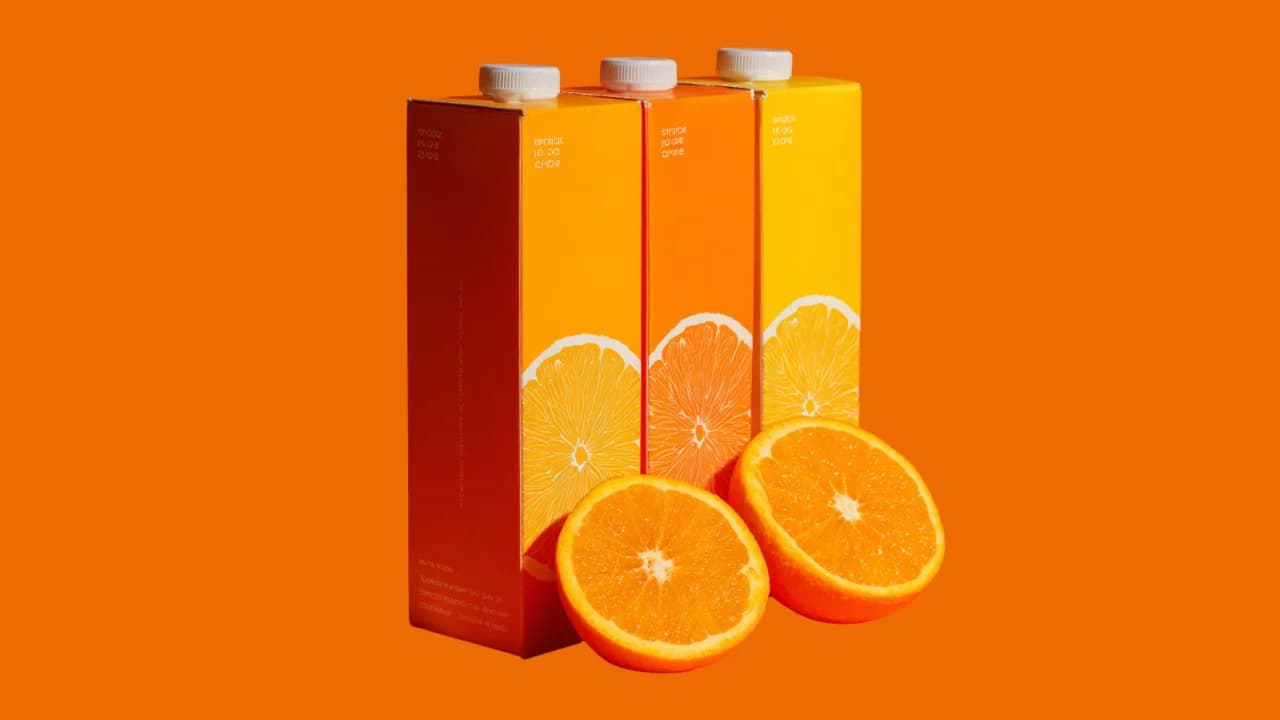
Since April 2024, we have published two articles analyzing the performance of leading generative artificial intelligence (AI) systems when tasked with packaging design prompts—specifically, the development of concepts for “innovative orange juice packaging.”
The tools we have explored (and will test in this piece) include:
Canva Magic Media
Midjourney
Adobe Express
ChatGPT
Fotor AI
Packify.ai
Due to the success of these pieces, we decided to revisit this topic and explore how the tools have evolved since spring of 2024, using the same prompt for consistency. Knowing how to use generative AI in packaging and design can set you apart and future-proof your skills in a rapidly evolving field. Packaging teams at leading brands like Coca-Cola and Mattel are using generative AI tools in select applications, and this article will explore how you can do the same!
Let’s dive into how these generative AI tools have changed over the last couple of years! But first, you might want to check out the 2024 and 2025 editions for comparison.
Canva Magic Studio
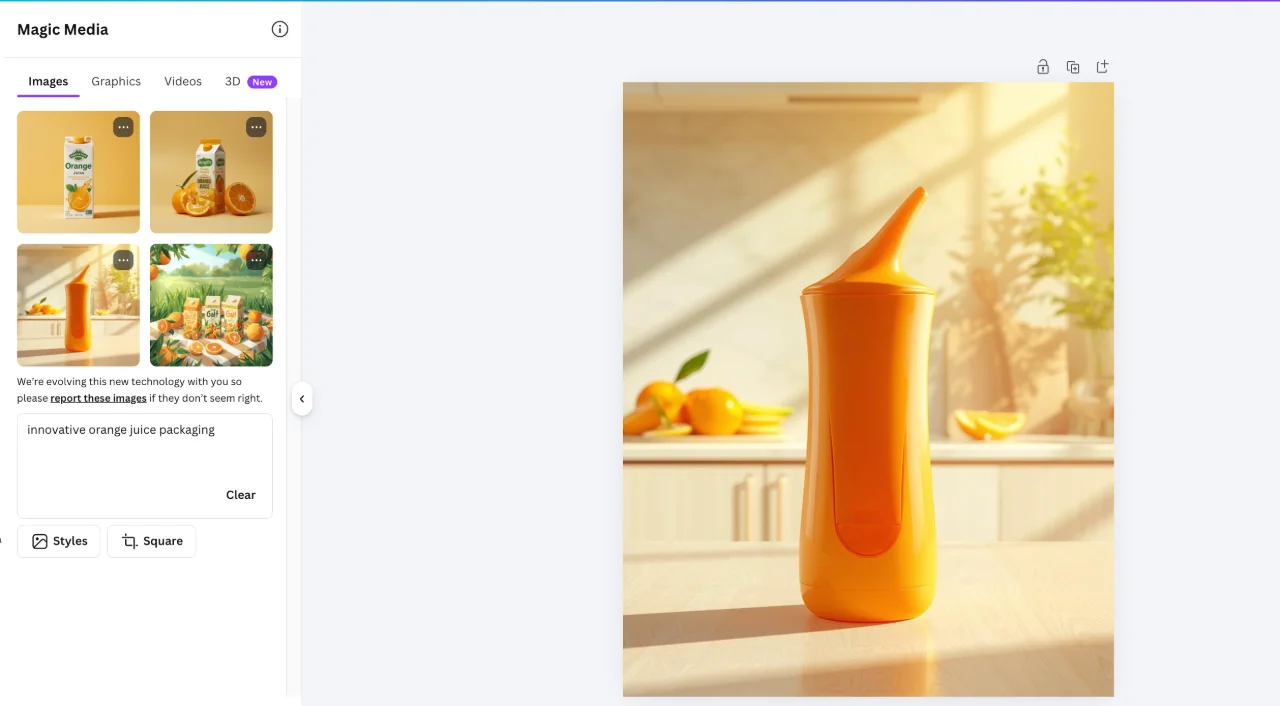
Starting with a tool already in many packaging professionals’ and designers’ toolkits, Canva’s Magic Studio harnesses generative AI for image creation and more.
In the 2025 edition, we noted that Canva added a suite of new tools to Magic Studio—including Dream Lab, Magic Expand, and others. We explored the capabilities of Dream Lab in that edition, but for this piece, we will focus on Canva’s Magic Media (text-to-image) and compare a 2025 output to this year.
As mentioned, we will test the following prompt across all tools (the same since 2024):
innovative orange juice packaging
Canva: 2025 Output
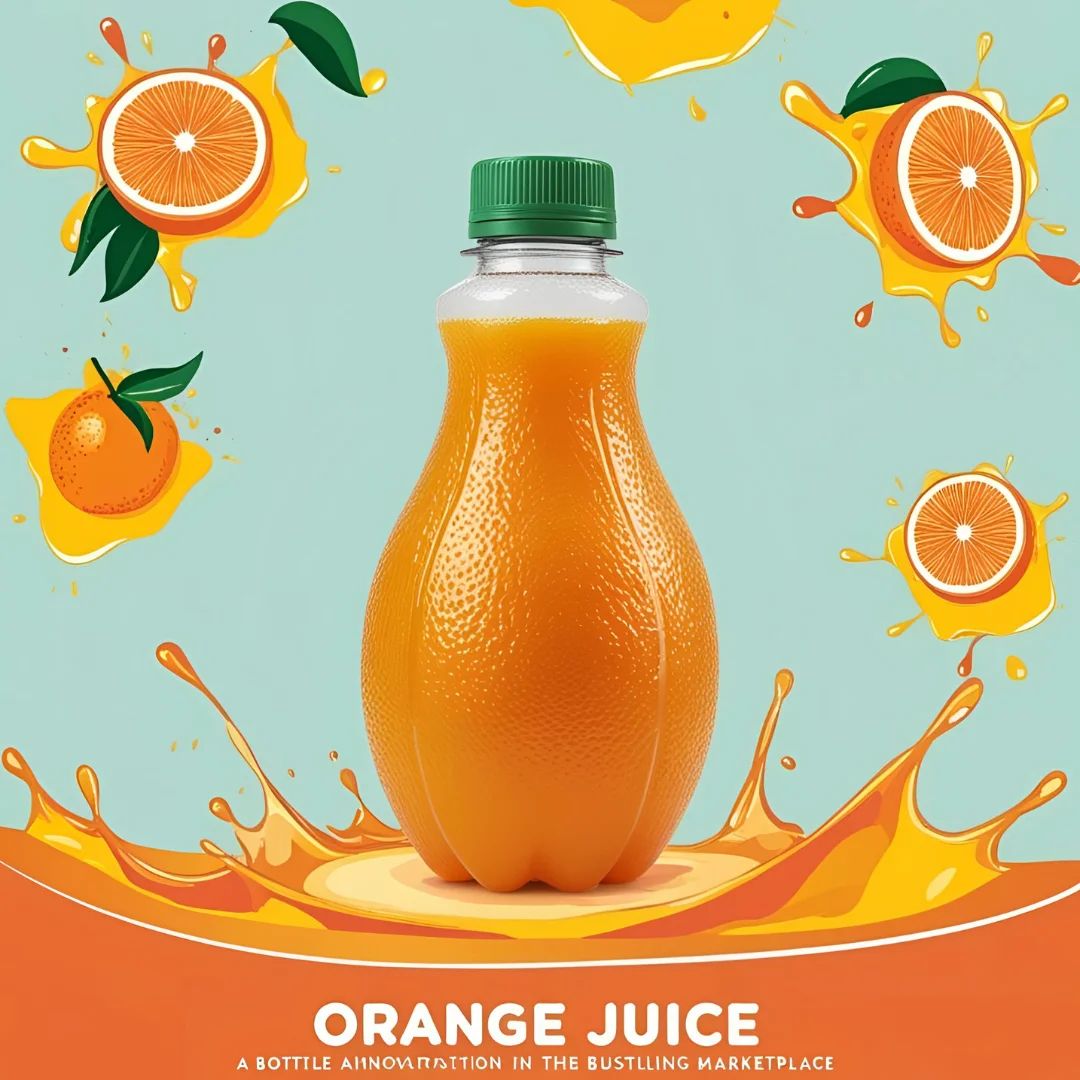
The image above shows the output from our testing in March 2025. The bottle shape and texture (mimicking that of an orange) are quite innovative and the spelling in the text is correct. Only one in four of the mockups in 2024 spelled "orange juice" correctly, while all of the versions from 2025 were correct.
Canva: 2026 Output
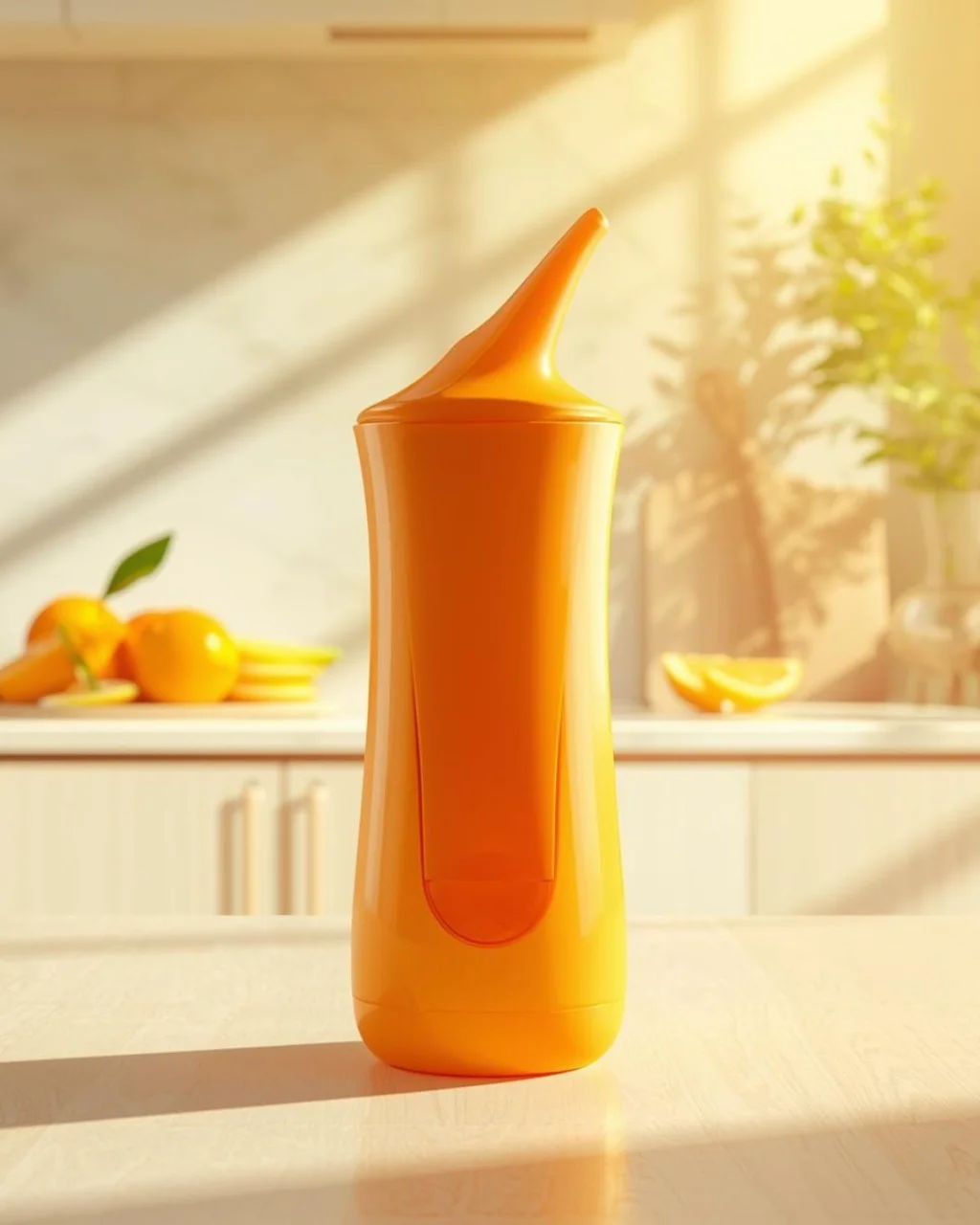
Now we get to our February 2026 test—one of four packages generated (and my personal favorite). This design is certainly innovative—a futuristic look with a two-tone orange exterior and an interesting straw / spout mechanism at the top.
The package appears to be a type of rigid plastic—a standout in a category dominated by paper cartons. The other three mockups appear to be paper cartons or multi-material cartons.
While this mockup is without text, only two of the three other designs spelled "orange juice" correctly—with one reading “Ornig Juice.” This was an unexpected twist, as we had seen great improvements in text from 2024 to 2025.
You can try select Magic Studio features with a free Canva account, but a Canva Pro subscription unlocks full access to 20+ premium tools. Learn more about Canva’s generative AI pricing options here.
Midjourney
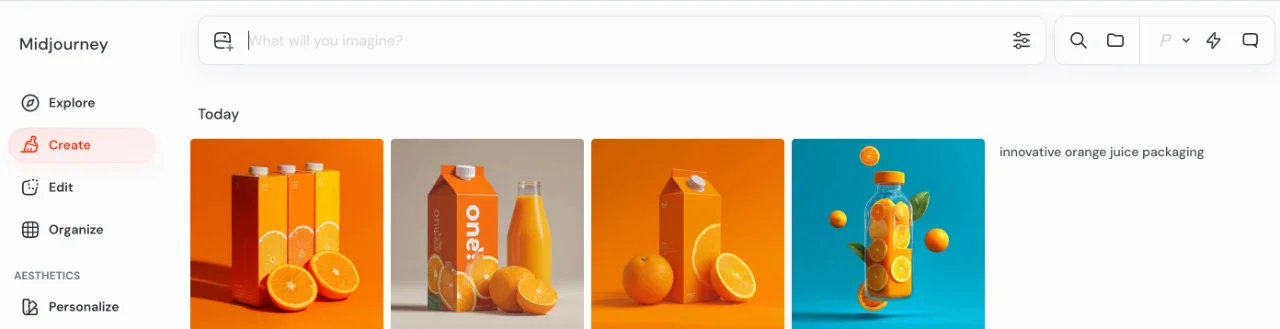
Midjourney is a leading generative AI and text-to-image software that launched in 2022. Unlike Canva, Midjourney is an AI-first platform that can be trickier to navigate for generative AI beginners.
To access Midjourney (even to test), you need to sign up for a subscription—with the basic subscription starting at $10 USD a month.
Since our 2025 edition, Midjourney has shifted to become a more user-friendly platform. Instead of navigating specialized Discord channels and entering prompts, users can now generate images easily within the "Create" tab.
Midjourney: 2025 Output
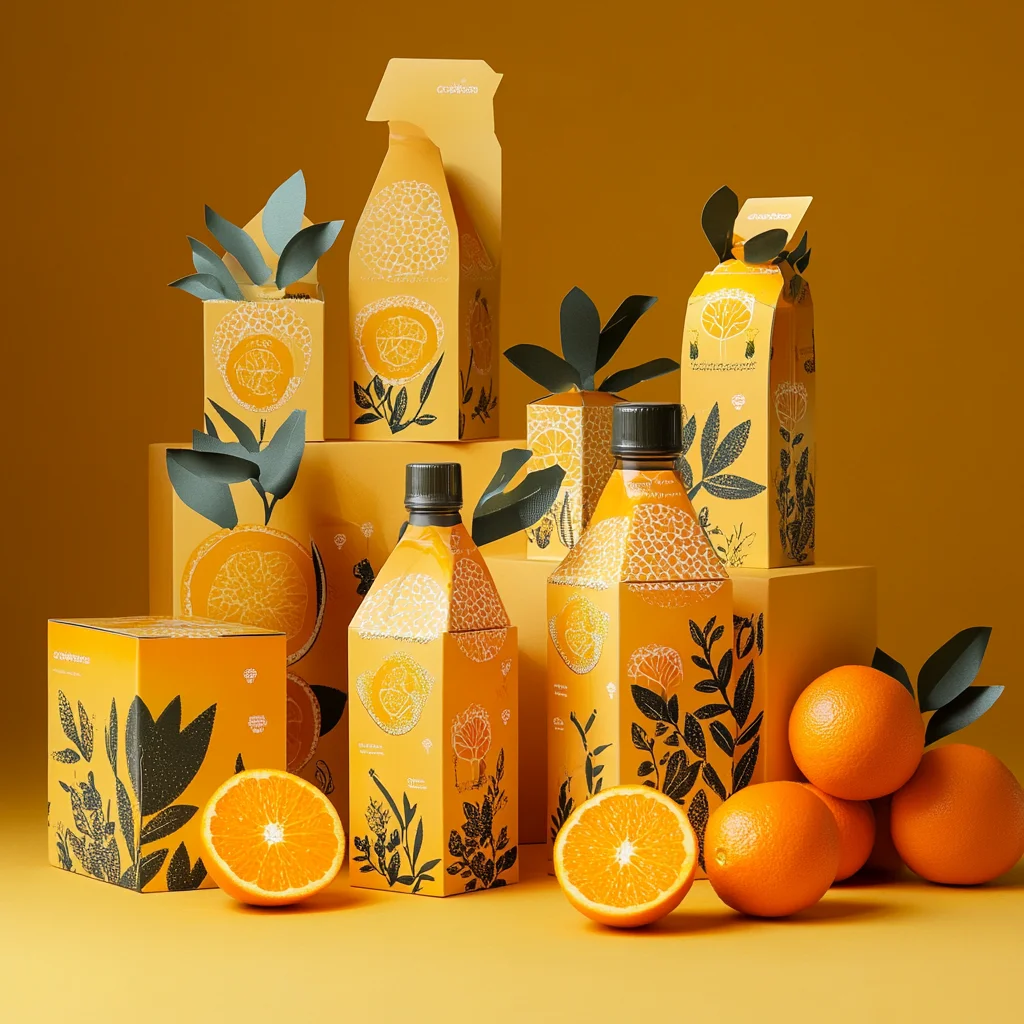
The image above was generated on Midjourney in March 2025 with our select prompt. The packages are various shapes and sizes of paper-based cartons and are littered with leaf imagery. While the designs are compelling, a few of the mockups appeared incomplete and distorted.
It should be noted that Midjourney has an "Edit" tab allowing designers to clean up issues in generated designs. But for the sake of this piece, we decided to see what they could do without additional tweaking.
Midjourney: 2026 Output
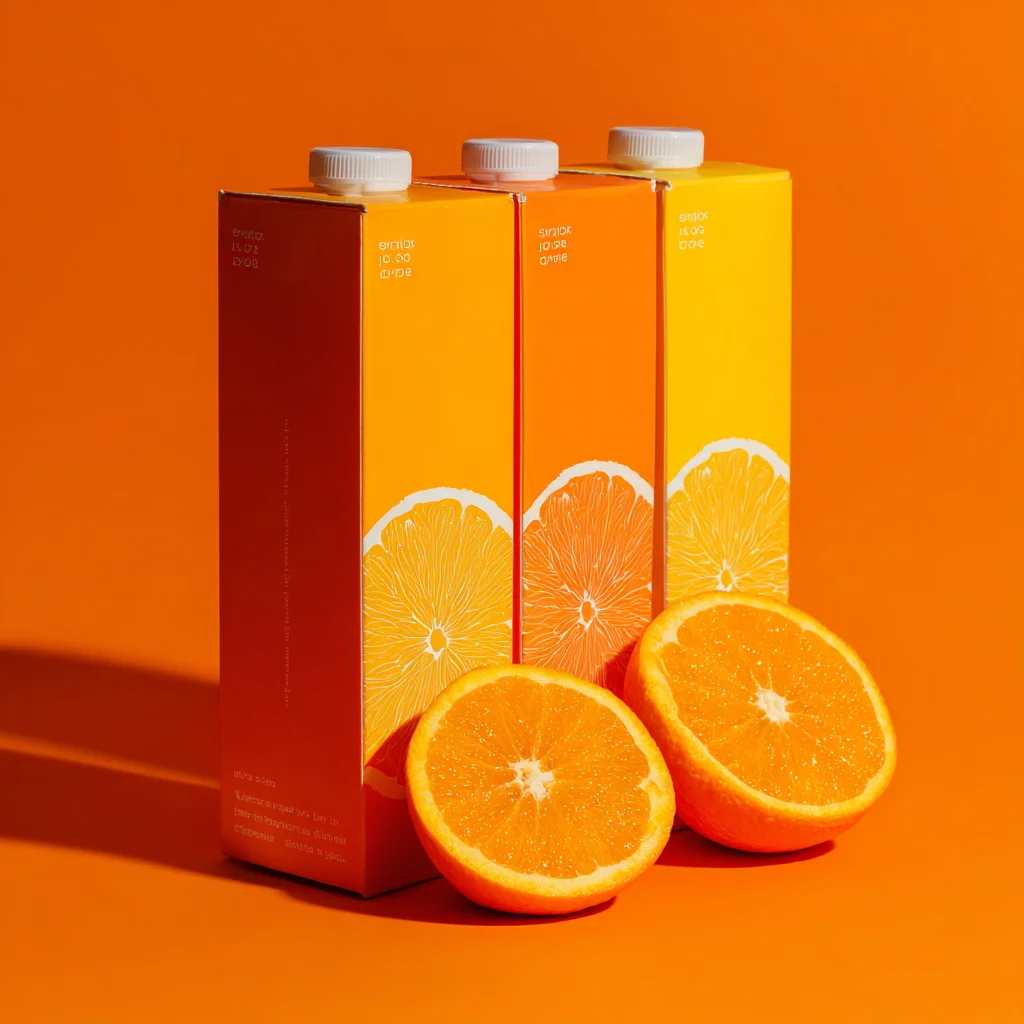
The same prompt on Midjourney in February 2026 gave us this image—one of four results (and my favorite). I love the different shades of orange and the fruit illustrations, though the packaging format itself is not overwhelmingly creative (multi-material / paper carton) for the category. But the design is bound to catch attention and drive sales in congested fruit juice planograms.
One thing I noticed about Midjourney is that every single design had issues generating legible and real text. I had expected improvement on this front YoY, but on-pack copy still seems to be a roadblock in generative AI tools like Midjourney.
With that being said, the other designs were innovative and offered a mixture of paper-based cartons and one clear PET bottle—all with artistic orange imagery. I also appreciate that the generated images resemble the polished packaging reveals often seen in redesign announcements.
Despite the lack of a free trial, Midjourney is a must-try platform for packaging teams looking to explore inspiring design ideas and mockups. Learn more about Midjourney subscription plans here.
Adobe Express
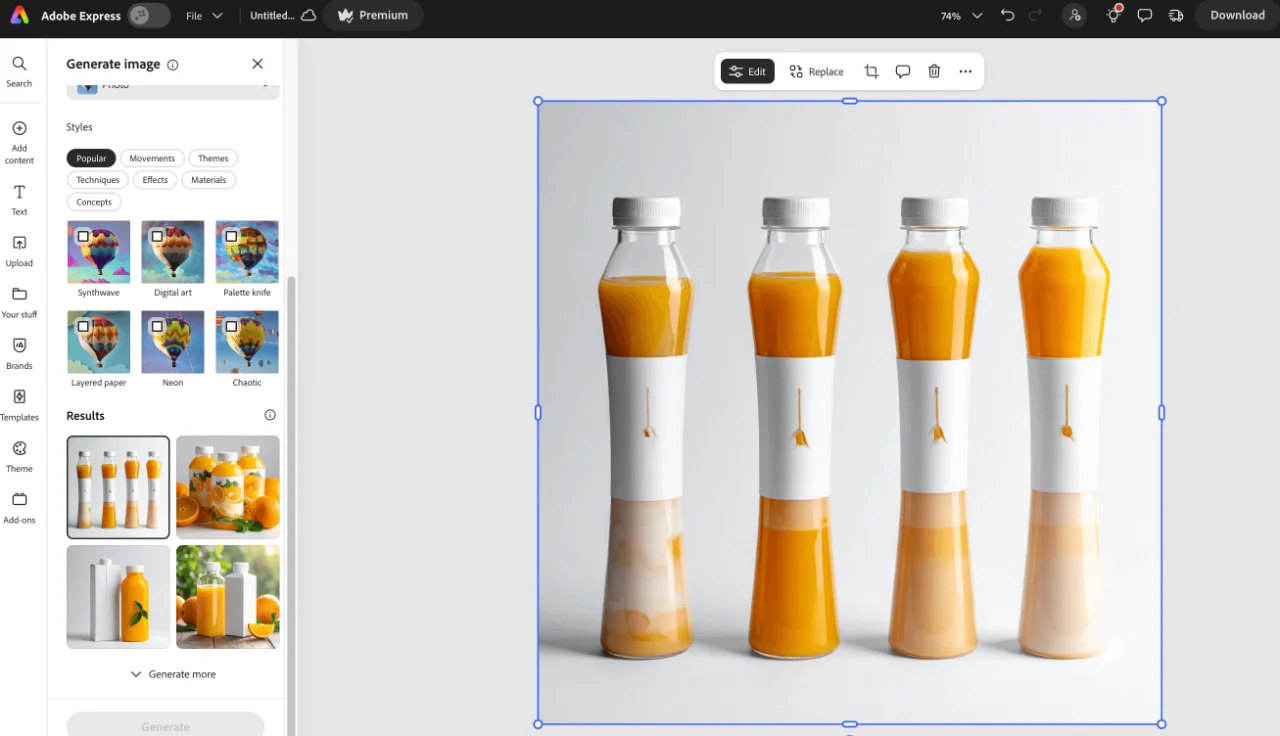
Similar to Canva, Adobe Express has an array of text-to-image and generative AI tools housed within an already-familiar software to both graphic and packaging designers.
Adobe’s text-to-image tool runs through Firefly Image 4 by default (and what we used), but gives you the option to add “Non-Firefly Models” by other generative AI creators, including:
Google Gemini 3, Gemini 2.5 Flash Image, and Imagen 3
OpenAi’s GPT Image
FLUX’s 1.1 Pro, Ultra, and Ultra (Raw)
Unlike Canva, Adobe’s generative AI tools allow you to alter mockups and incorporate different "Materials" and "Styles," making it a strong tool for packaging designers to incorporate into their workflow.
Adobe Express: 2025 Output
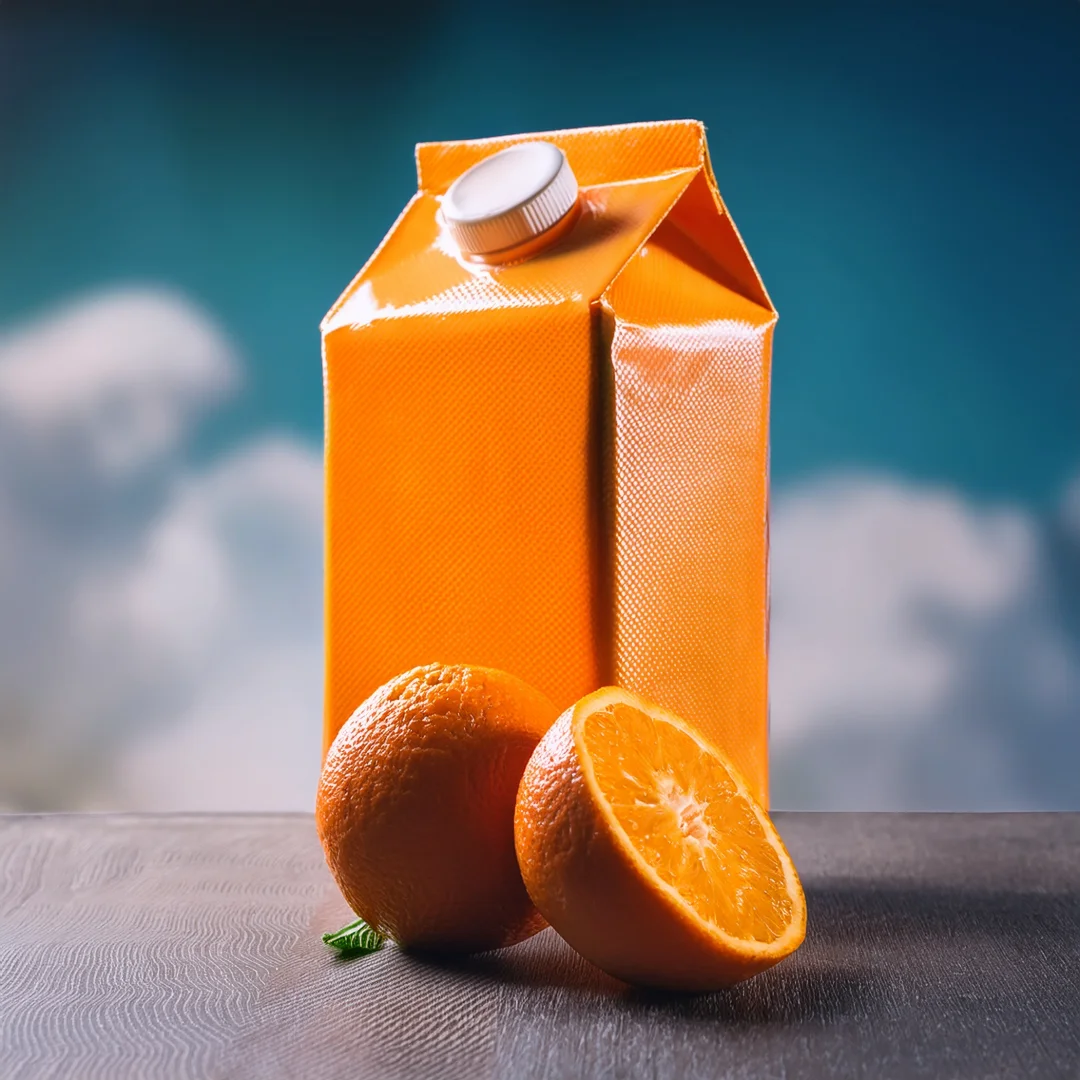
This concept is one of four mockups generated in March 2025 using Adobe Express. The design is notably innovative—so much so that the primary packaging material is not immediately identifiable.
All four mockups from 2025 were opaque—concealing the juice within—and none incorporated on-pack text or labeling elements.
Adobe Express: 2026 Output
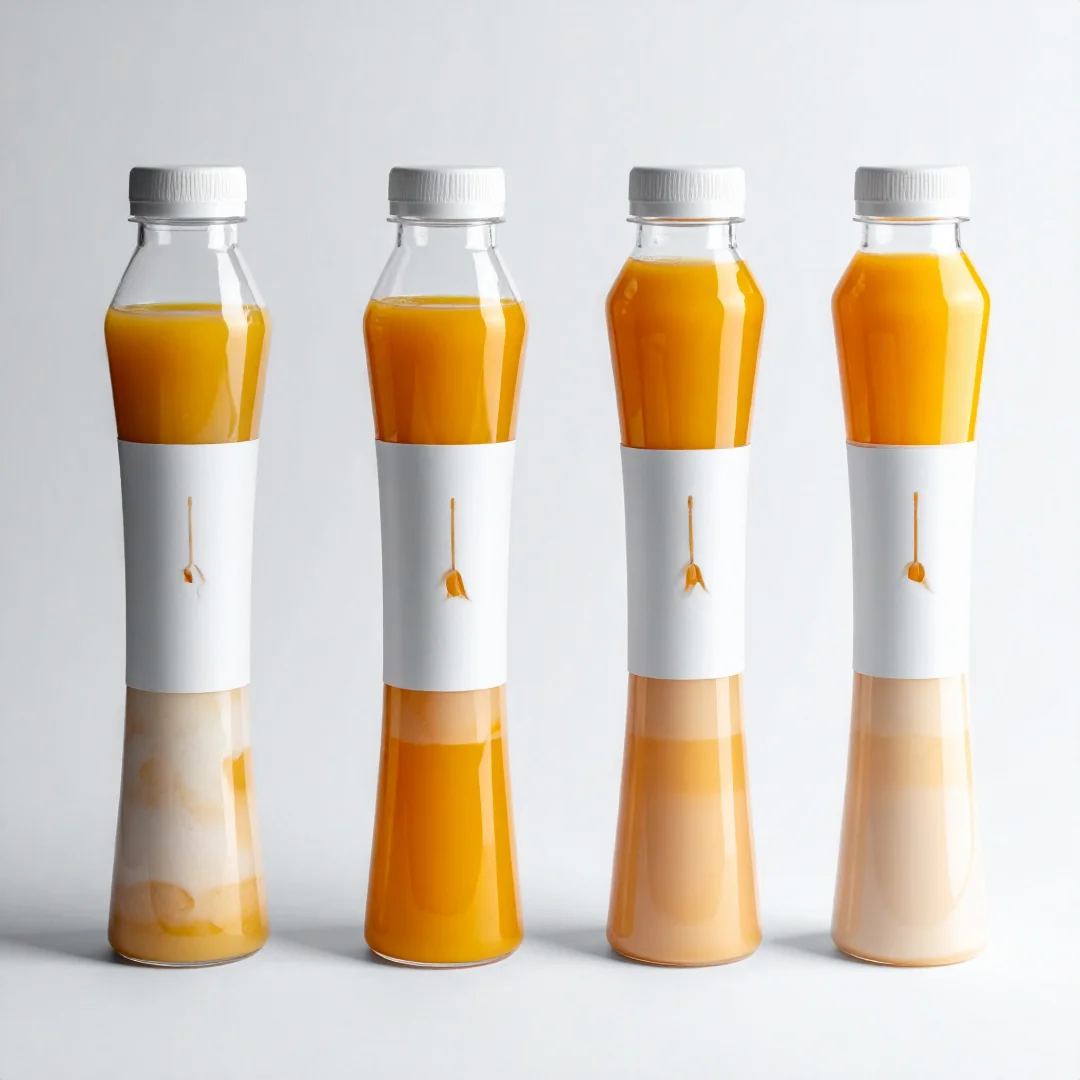
The image above is one of four results from our February 2026 testing—definitely an out-of-the-box design for the category. The mockup includes a tall, slender bottle (likely PET) topped with a white label displaying an indecipherable illustration.
This format would certainly stand out on store shelves next to the paperboard cartons and large plastic containers that typically define the category. With its abstract shape and artwork, the packaging could fit a brand pushing a luxury or premium product.
One thing that seems a bit off with this design is the way the bottom of the bottles show a milky substance swirled in the juice—making it look like orange creamsicle juice.
Similar to the four 2025 mockups, not one of the generated designs includes copy—perhaps a safeguard from mistakes like those found in the Canva and Midjourney platforms.
You can access Adobe’s generative AI tools through the same Adobe Express subscription model. Read more on pricing and subscription options here.
ChatGPT
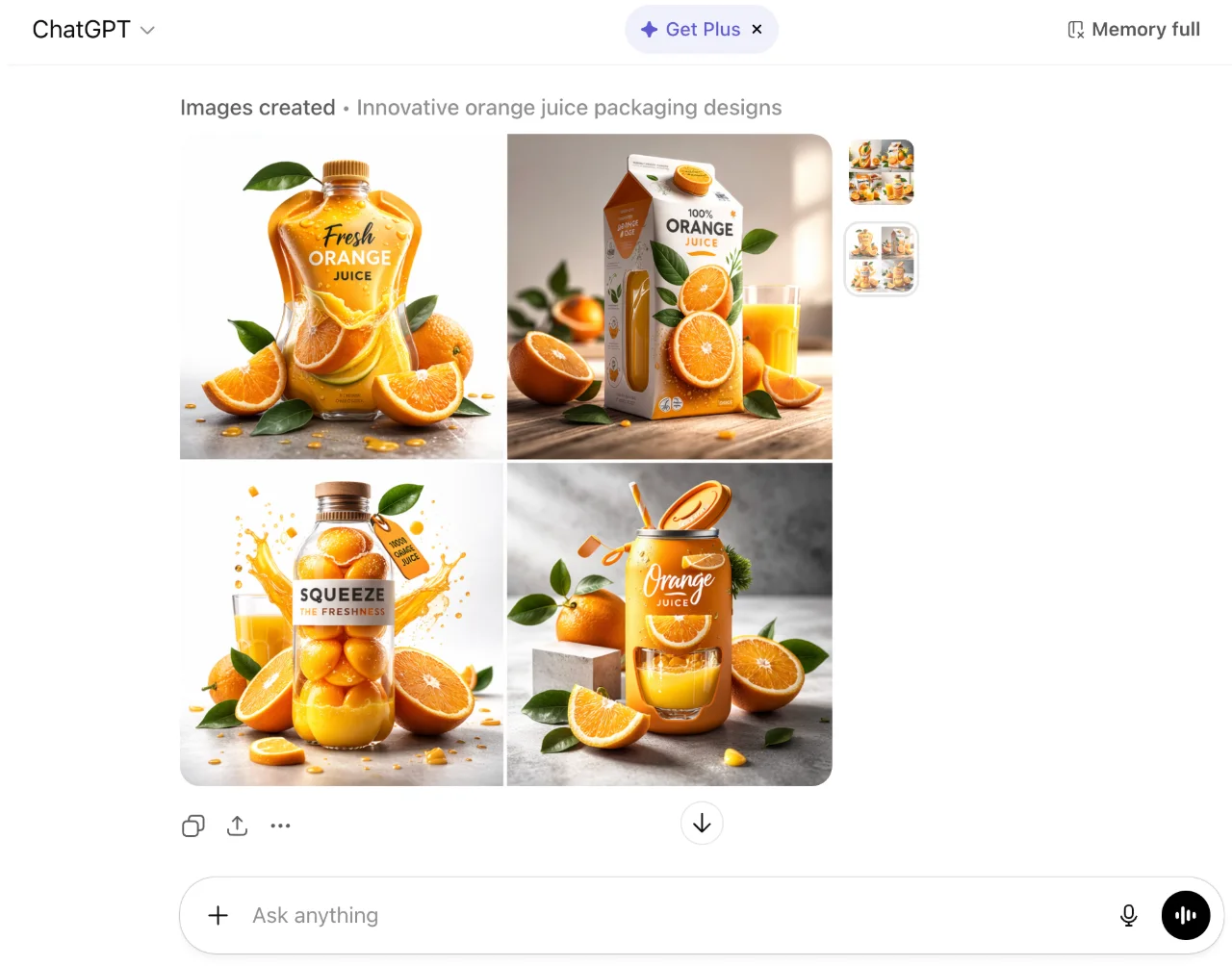
With users sending roughly 2.5 BILLION prompts per day since mid-2025, OpenAI’s ChatGPT has reshaped how consumers and professionals search for information and organize workflows.
While many use ChatGPT for text-based prompts and inquiries, the platform can also handle text-to-image generation—even on the free edition.
To generate something similar to what I did above, simply open a "New Chat" and type the following:
"Please generate four images of innovative orange juice packaging."
Make sure to specify “please generate four images,” as simply typing “innovative orange juice packaging” will likely result in a text-based list of real world examples of orange juice packaging.
ChatGPT: 2025 Output
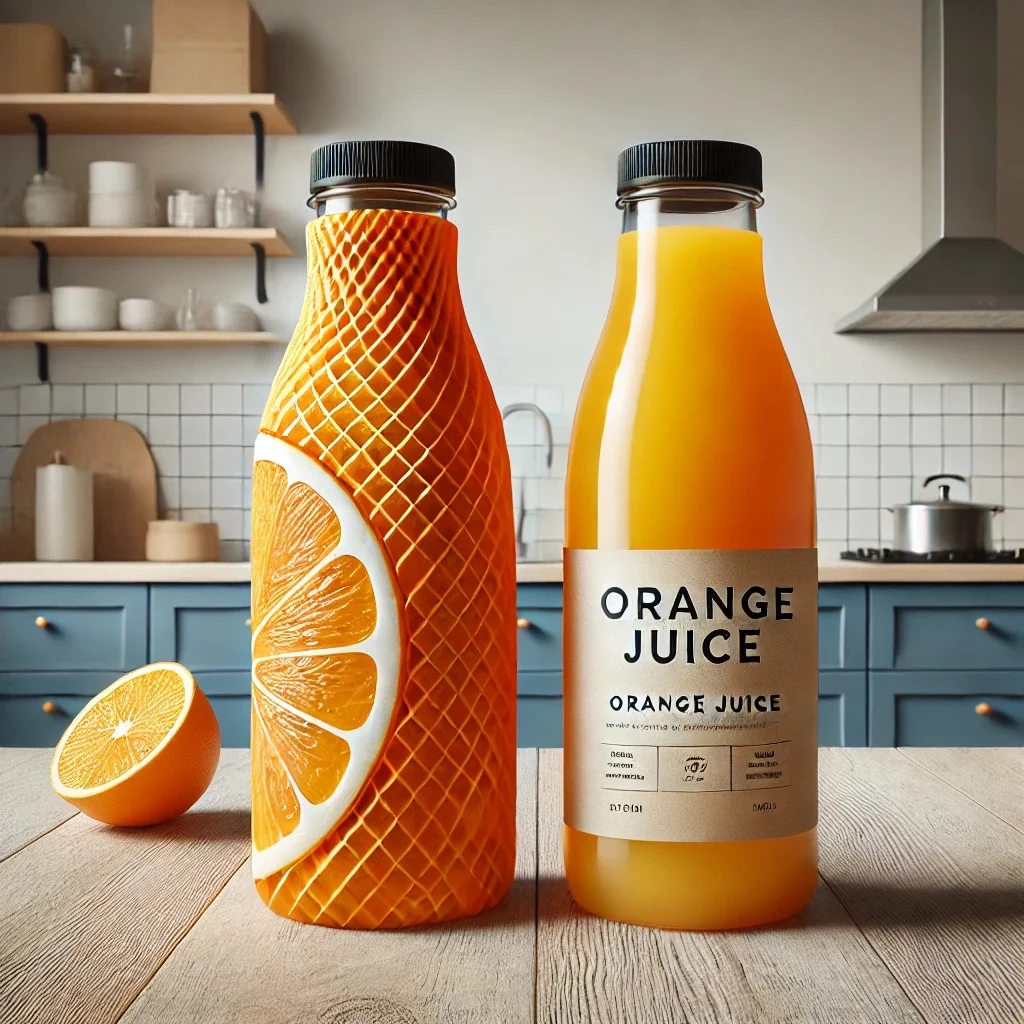
This is my favorite output from last year’s results. While the bottle on the right is rather conventional, the one on the left is exactly the type of mockup / conceptualization that is bound to inspire designers.
The bottle features an orange peel-inspired texture with an orange slice illustration on the side. I truly have never seen anything like it in the category; it could easily belong at Meow Wolf’s Omega Mart or a modern art museum. The design also plays into more recent trends that utilize texture and other sensory marketing tactics in packaging.
Also, I was impressed by the rather legible text on the glass bottle to the right. It clearly states “Orange Juice” and is spelled correctly. The smaller text at the bottom is hardly legible but is still an improvement when compared to other tools we tested.
ChatGPT: 2026 Output
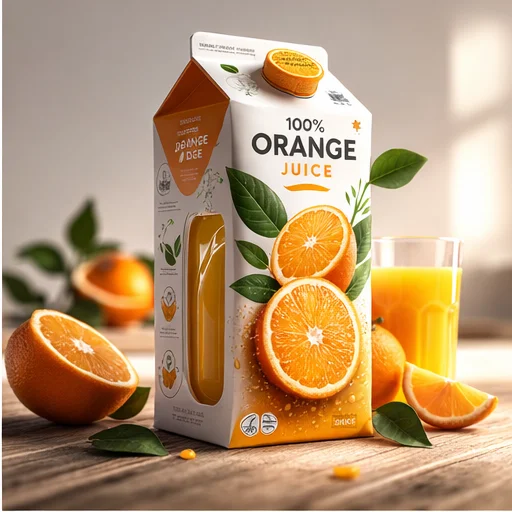
Now, let’s get to this year’s ChatGPT output—it’s certainly dynamic with a lot of moving pieces. While a conventional format for the category (paper-based carton), the orange-inspired cap, translucent window, and what looks like recycling information on the side are innovative touches.
It is interesting to note that ChatGPT utilized a very similar cap to what Tropicana tried in their infamous redesign blunder. Despite its innovative intent, the new cap and accompanying redesign failed to resonate with consumers—triggering a sharp sales decline and costly corrective action.
Like Midjourney, ChatGPT presented the images in a format typical of packaging design press releases, which gave them a highly professional appearance.
Sadly, the other three images leave a lot to be desired. One was a can with a glass cup within the can? Another was a glass bottle labeled “Squeeze the Freshness,” housing 10–15 small oranges inside. The other was a baby-food style pouch that stated “Fresh Orange Juice” with a leaf growing from the side.
Regardless, ChatGPT proves to be a powerful tool to quickly generate design inspiration for orange juice packaging and other formats. As mentioned, using this tool is free but access may be limited if you use it frequently. Read more about ChatGPT pricing models and their inclusion of text-to-image functions here.
Fotor
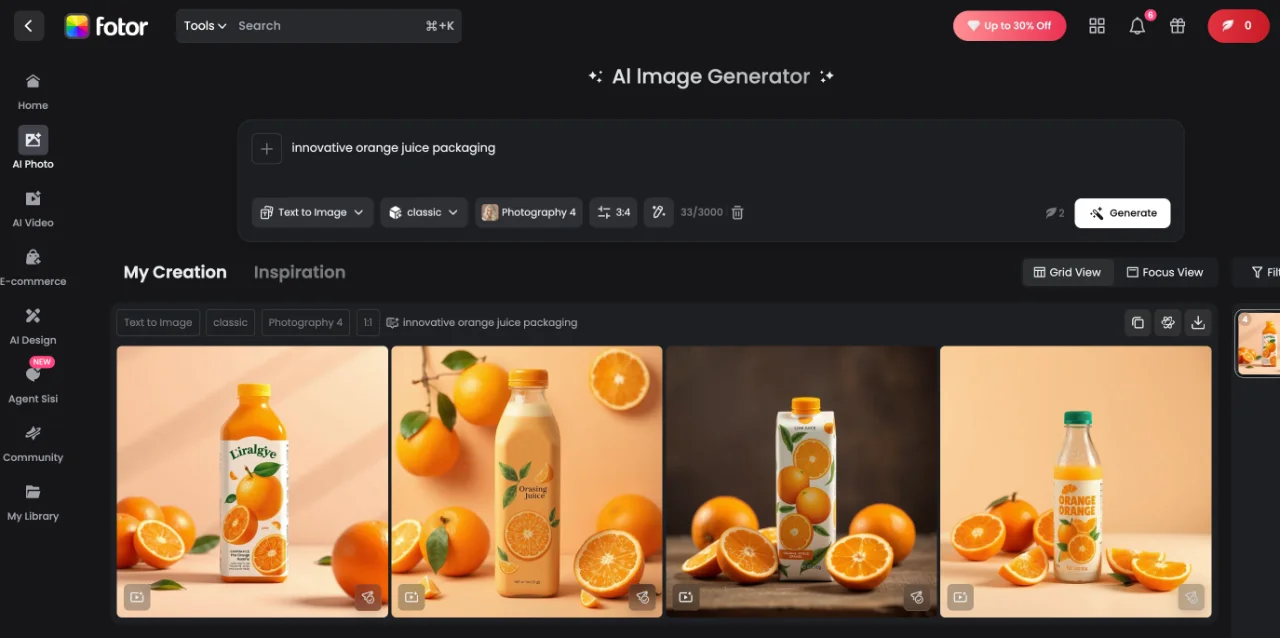
The next platform we explored was Fotor, which has an array of generative AI tools—spanning text-to-image, video, editing tools, and more.
In order to test Fotor’s text-to-image capabilities, create an account with an email and you are given access to credits to run prompts. Once the credits expire, purchase more credits or sign up for one of the subscription plans.
Fotor: 2025 Output
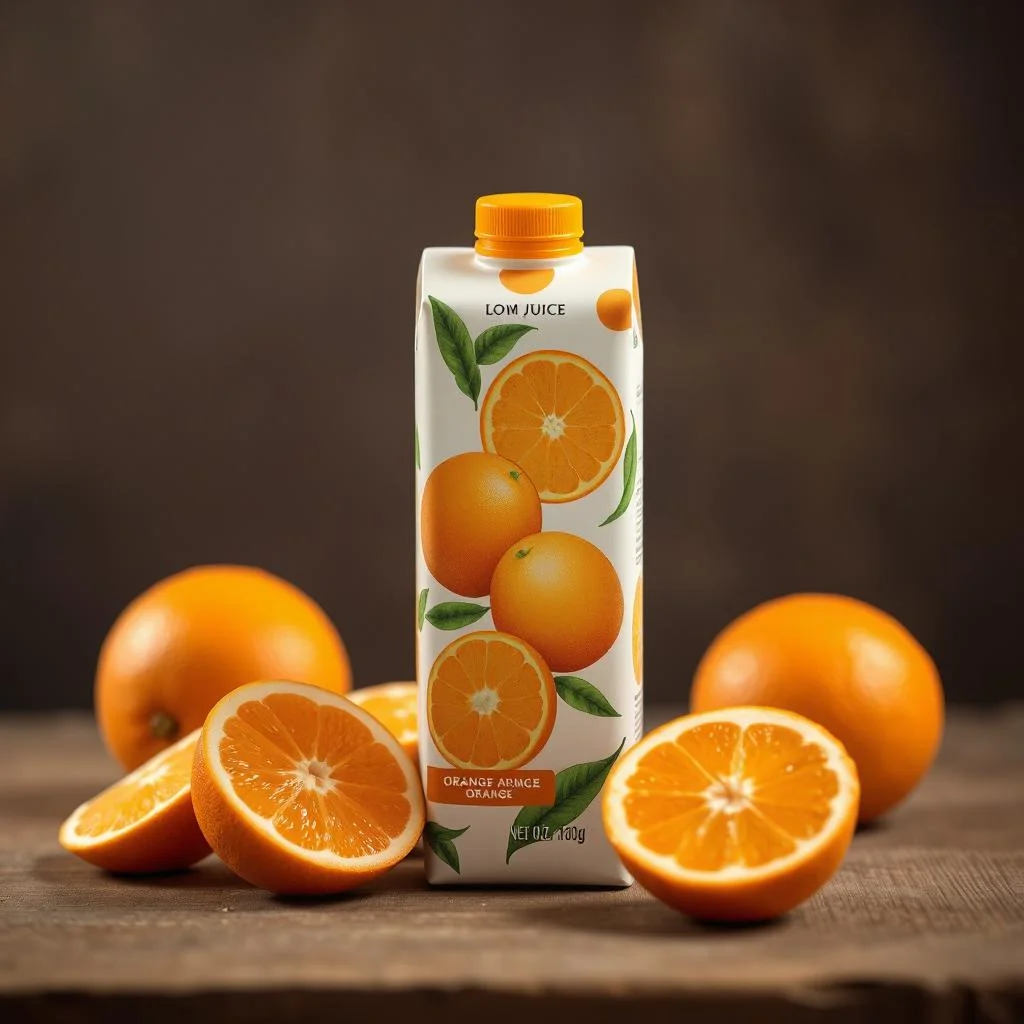
The image above is one of four generated in 2025’s testing. While some of the text is illegible and random (“Low Juice”), the illustrations are beautiful.
Fotor’s AI tool seems to take inspiration from Chobani’s on-pack fruit illustrations. While this is not ground-breaking for the orange juice category, I thought the rendering with the leaves and different angles of the orange is compelling.
Interestingly enough, when we retested the tool in February 2026, it produced the identical mockup—an outcome unique across all of our year-over-year prompt comparisons.
Fotor: 2026 Output
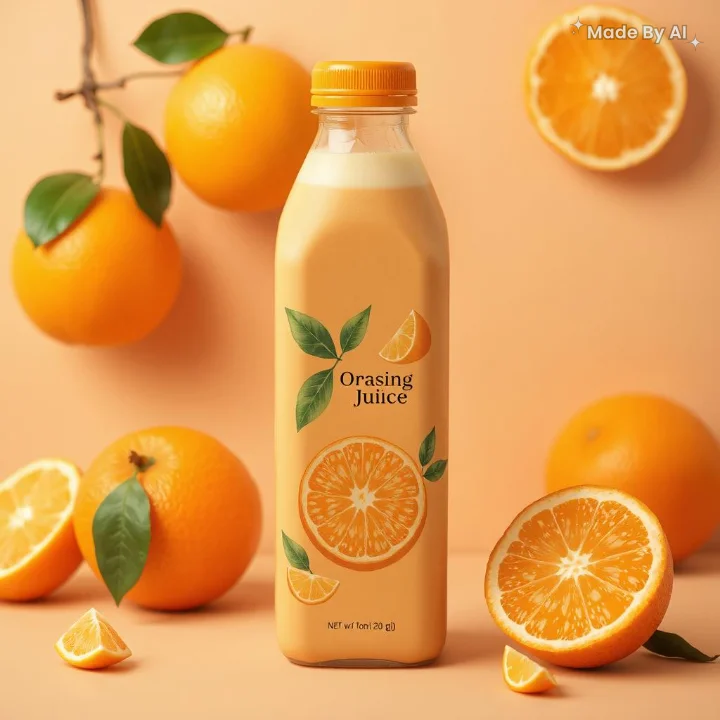
Here’s a favorite from the mockups generated in February 2026. Despite minor text errors—"Orasing Juiice"—the mockup demonstrate strong potential for the category. Similar to the 2025 mockup, the fruit illustrations are Chobani-esqe in nature and include multiple angles of the sliced orange.
The color of the PET bottle is unique to the category, almost like a faded orange. Additionally, while some of the text is not legible, there is an effort to include net weight and units of measure—this was standard across all Fotor mockups in 2025 and 2026.
While Fotor might be a new platform for a lot of graphic designers and packaging pros, it is worth exploring. Read more about subscription models and credits here.
Packify.ai by Pacdora
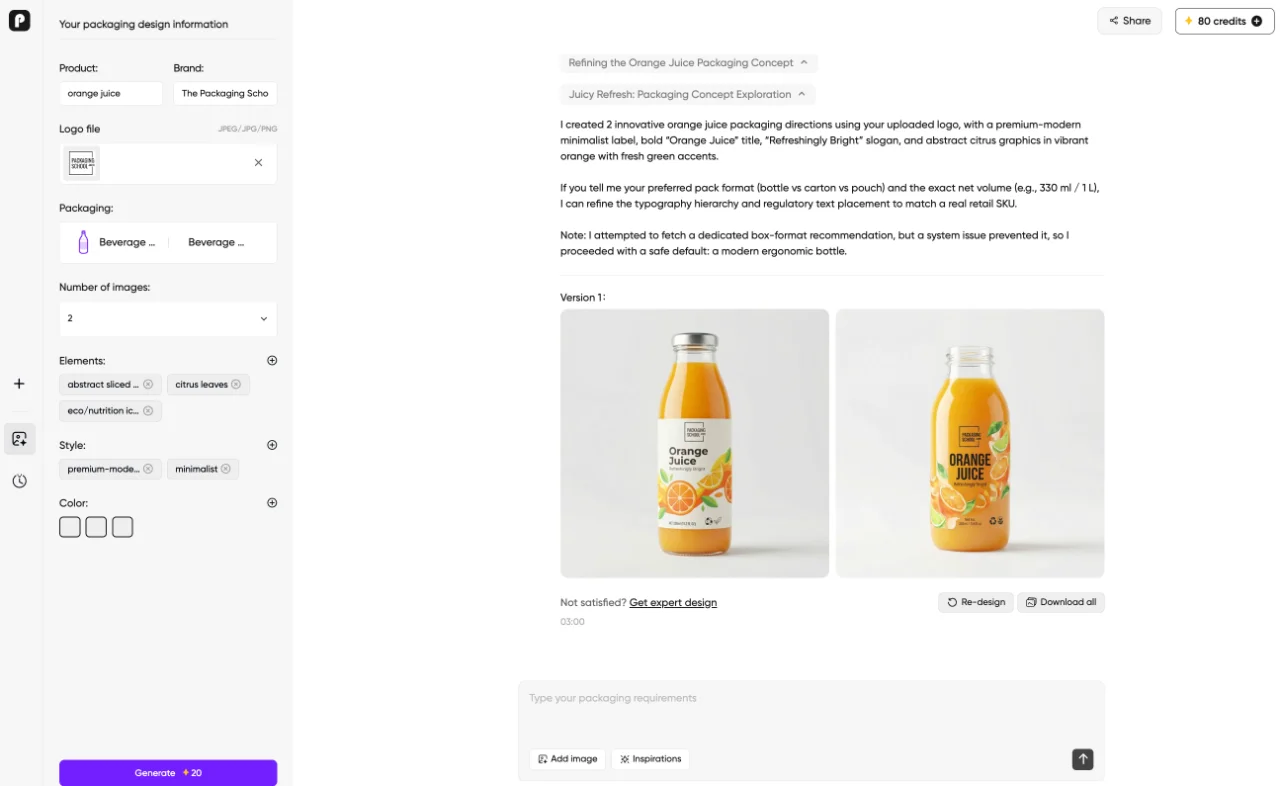
The next tool we explored was Packify.ai by Pacdora—the “first AI Packaging design agent in the world.” Unlike the other tools we explored, Packify.ai is made specifically for packaging applications and allows you to add the:
Brand Name
Product Name
Logo
Packaging Type (including Beverage Bottles)
Elements
Style
As you can see in the screenshot above, there is no way to type "innovative orange juice packaging" and get the desired results. Packify.ai requires a few extra steps, but they are DEFINITELY worth it for the types of mockups the platform generates. Since it is solely packaging focused, you also have the option to export a dieline.
Pacdorca and Packify.ai also include an AI-powered packaging photoshoot tool. Read more about the tool and how to use it here.
Packify.ai: 2025 Output
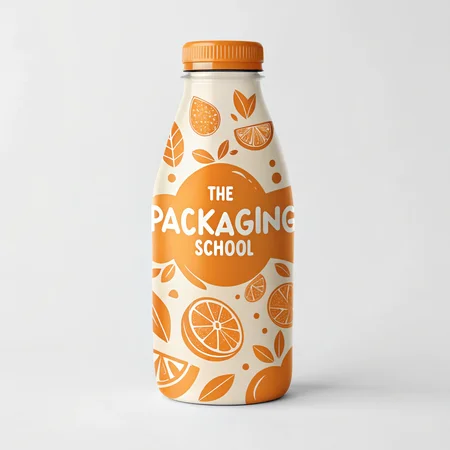
Unlike the other tools in this piece, Packify.ai only allows for two images at a time (which I didn't have an issue with due to the customization capabilities). The one above is my favorite from the 2025 tests. Cartoon-like illustrations on the off-white background are playful and stand out in a category dominated by realistic orange depictions.
Another advantage of Packify.ai is the ability to refine elements and styling after the initial design—bringing new mockups closer to your original vision.
Packify.ai: 2026 Output
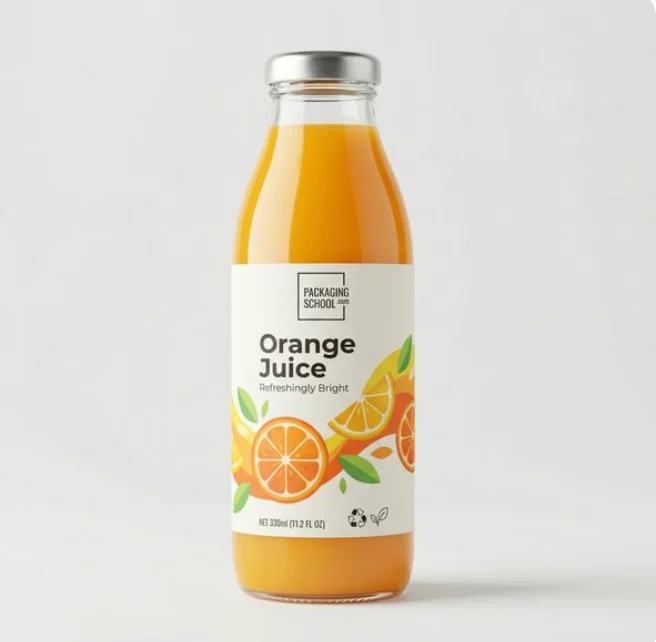
his is one of the two mockups generated on Packify.ai in 2026, both include glass bottles with a similar design (fruit illustrations, icons, and logo placement). The illustrations are fluid and incorporate juice with the fruit and leaves.
While it is not the most “innovative” mockup in terms of form and design, I appreciate how practical and applicable the design is. The ability to include a logo and custom information makes this one of the most powerful generative AI tools a packaging professional could add to their workflow.
Another thing that blew me away with Pacdora’s tool is the proficiency in copy and other on-pack elements. For example, both "Orange Juice" and "Refreshingly Bright" are spelled correctly and are completely legible. Additionally, the bottom of the package reads “NET 330ml (11.2 FL OZ)”—which is not only legible but also a proper conversion.
The inclusion of the recycle logo and leaf icon (potentially mimicking the USDA Organic label) is a realistic touch and is consistent with both mockups generated on the tool in 2026.
Packify.ai also included a blurb above the mockups to explain its rationale, titled “Juicy Refresh: Packaging Concept Exploration.” It stated:
“I created 2 innovative orange juice packaging directions using your uploaded logo, with a premium-modern minimalist label, bold “Orange Juice” title, “Refreshingly Bright” slogan, and abstract citrus graphics in vibrant orange with fresh green accents.
If you tell me your preferred pack format (bottle vs. carton vs. pouch) and the exact net volume (e.g., 330 ml / 1 L), I can refine the typography hierarchy and regulatory text placement to match a real retail SKU.
Note: I attempted to fetch a dedicated box-format recommendation, but a system issue prevented it, so I proceeded with a safe default: a modern ergonomic bottle.”
While all of the tools we explored have merit, we highly recommend trying out Pacdora’s Packify.ai if you are looking for a generative AI tool designed specifically for technical packaging operations and needs. Read more about subscription tiers and pricing here.
Learn More About Packaging Design
Generative AI offers a powerful starting point for packaging inspiration and mockups. Yet, even with AI-driven ideas, packaging teams must plan, prototype, and validate innovations before taking them to market.
In order to help packaging teams navigate packaging development and management projects, The Packaging School created an online, PhD-led program called the Certificate of Mastery in Packaging Management (CMPM).
A core part of the program is a 12-week project, the Packaging Development Plan (PDP), that helps guide students in creating a market-ready packaging innovation through a 10-phase development template.
For example, a PDP project could explore how to turn a generative AI mockup for orange juice packaging into an optimized, shelf-ready design. No matter your focus, the PDP provides a proven framework and PhD guidance for bringing an innovation straight from the drawing board (or AI software) into the hands of a consumer.
The application deadline for the next CMPM cohort is April 1, 2026. The program will run from April 13 to July 6, 2026 through the guidance of our Academic Director—Dr. Julie Rice Suggs.
Learn more about the program here.
By signing up you indicate you have read and agree to our Terms of Use. Packaging School will always respect your privacy.
