
Top Four Styrofoam (EPS) Alternatives
Top Four Styrofoam (EPS) Alternatives
Here at the Packaging School, we like to approach packaging development and sustainability from a “material agnostic” lens—meaning we strive to be free from preconceived notions and let the data (typically from a life cycle assessment) drive material selection and packaging design. And that’s because there’s no silver bullet when it comes to sustainable packaging; trade-offs must be navigated and sustainable packaging strategy should be under the umbrella of an organization's overall sustainability strategy.
Despite this approach, it’s hard to ignore some of the cold hard facts about different materials. One that gets a lot of negative attention, and rightfully so, is expanded polystyrene (EPS)—more commonly known as styrofoam.
Intro to Styrofoam
Styrofoam was invented in the early 1940s by Ray McIntire of Dow Chemical Company, who was tasked with creating a “rubber-like flexible insulator” that would simulate rubber—a material in short supply due to World War II. The material, dubbed STYROFOAM™, was patented in 1944 and has been a staple in numerous industries for its moisture and thermal resistance and low cost compared to alternatives.
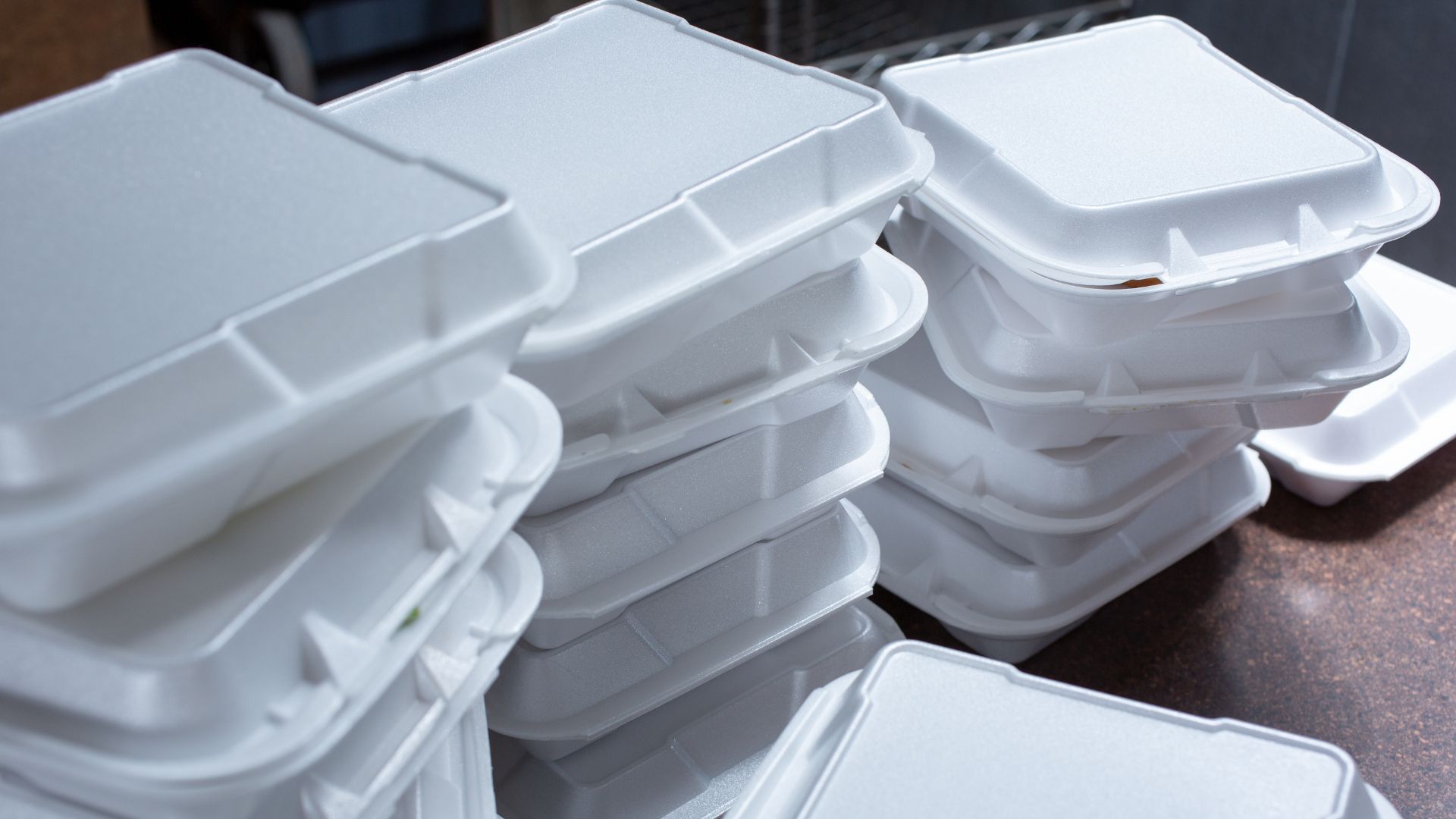
In the packaging industry, polystyrene is typically used in the following applications:
Takeout containers and food packaging and cups
Protective packaging (electronics, glassware, etc.)
Insulation and cold chain packaging
Egg cartons
Packing peanuts / dunnage
Though banned in numerous US states for its sustainability-related shortcomings, EPS sits comfortably in its marketplace. In 2024, the market was $12.06 billion USD and it is expected to double to $24 billion USD by 2034, with a 7.46% CAGR during the period. However, many consumers are pushing organizations and brands to utilize biodegradable alternatives to styrofoam because of its reputation as one of the most difficult materials to recycle.
According to Jennifer Kite-Powell of Forbes, styrofoam has a recycling rate of less than 1%. This is peanuts compared to the average recycling rates of other packaging materials in US states, including:
PET with a 19.04% national recycling rate (2018)
Aluminum with a 31.28% national recycling rate (2018)
Glass with a 25.86% national recycling rate (2018)
The Role of EPR and Styrofoam Bans
Due to the challenges associated with recycling styrofoam—the fact that it can take up to 500+ years to break down in landfills, along with human health and environmental concerns—a number of US states and nations around the world have worked to ban the material, paving the way for alternatives we will discuss later in this piece.
Extended producer responsibility (EPR) laws that have passed in seven US states (Maine, Oregon, California, Colorado, Minnesota, Maryland, and Washington) are expected to include higher per ton/kg fees for EPS compared to other materials.
For example, many EPR for packaging programs like British Columbia, and others in Canada, have higher rates for styrofoam (meaning producers will pay more per kg if they decide to sell EPS into Canada). Take a look:
Corrugated cardboard: $0.56 cents/kg
PET bottles: $1.02 cents/kg
Expanded polystyrene (EPS): $3.24 cents/kg
Aluminum food and other containers: $0.61 cents/kg
Clear glass: $0.50 cents/kg
This means that every kg of EPS a producer supplies to British Columbia will include an additional $3.24 USD as a tax.
Let’s say the supplier decided to use a cardboard alternative as dunnage where EPS is used—they would only pay an additional $0.56 cents per kg. British Columbia and other territories have recognized the difficulties and externalities associated with styrofoam, therefore, attaching a higher tax to the material.
You can read more about EPR for packaging programs and fees in North America in our research article here.
While British Columbia and other EPR programs are working to incentivize the use of sustainable alternatives to EPS through EPR fees, others have decided to ban the material outright or in certain applications.
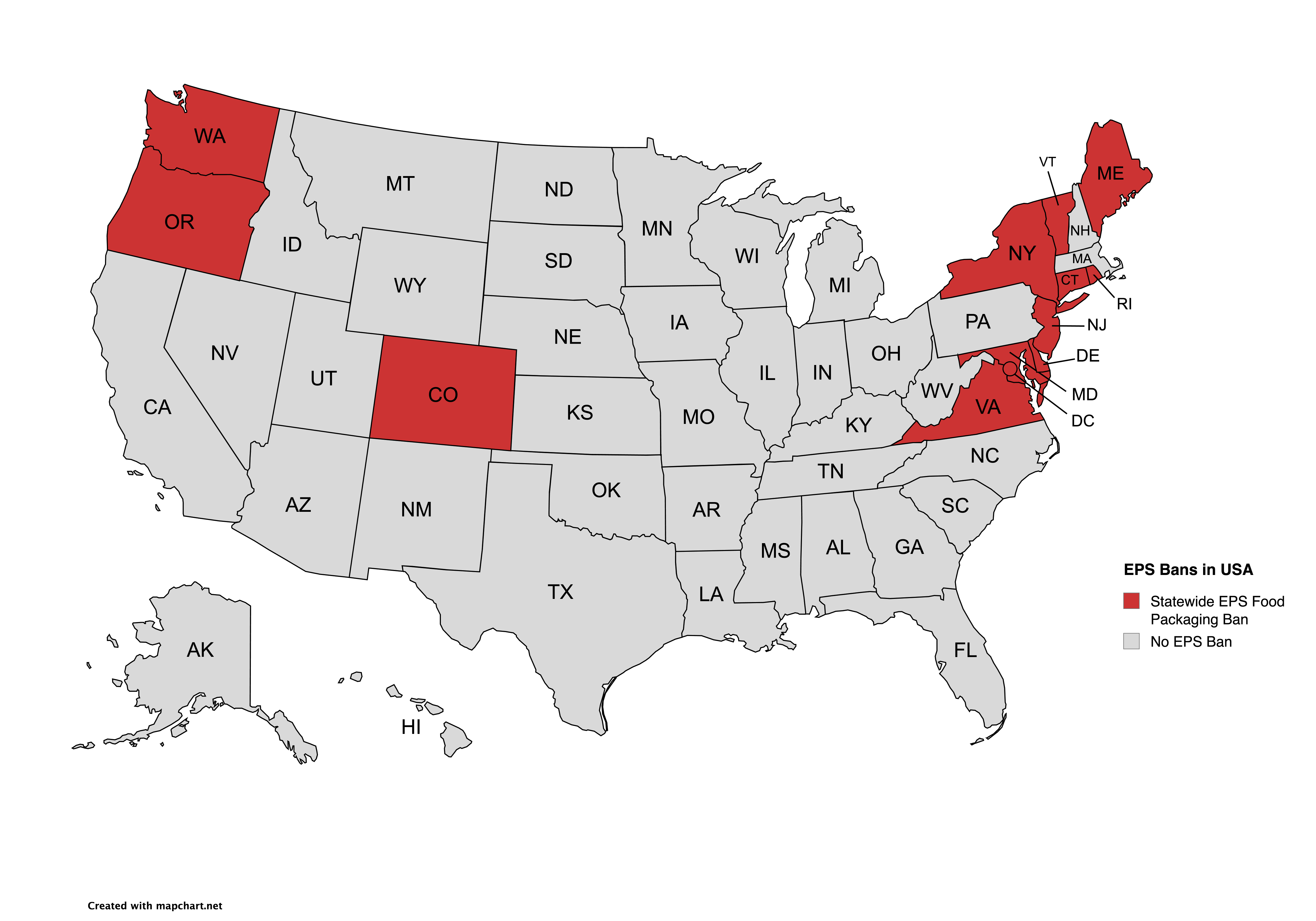
The map above highlights the US states that have banned styrofoam in some capacity; many of the bans are focused on banning EPS in food service applications. As the map shows, eleven states and Washington D.C. have implemented statewide bans of styrofoam containers used in restaurant and food service applications. The eleven states include: Washington, Oregon, Colorado, Virginia, Maryland, Delaware, New Jersey, New York, Rhode Island, Connecticut, Vermont, and Maine.
With the rise in EPR and statewide styrofoam bans, brands are seeking eco-friendly alternatives to EPS, empowering firms like Ecovative and Notpla to innovate and bring solutions to market. Let’s explore some of the most promising styrofoam alternatives, including mycelium, chitosan, plant-based foams, and seaweed.
Mushroom Packaging by Ecovative

Photo from Ecovative
Ecovative is based out of Green Island, New York and specializes in mycelium (the root structures of mushrooms) food, packaging, and other materials. One of their inventions is Mushroom Packaging, a styrofoam and plastic packaging alternative made of mycelium and hemp herd (a byproduct of hemp processing).
In 2010, Mushroom Packaging became commercially available and, as of 2023, is now open-sourced technology to “scale innovation across Europe.” Ecovative’s Mushroom Packaging has similar properties to conventional styrofoam—like heat, moisture, and product protection—yet is chemical and plastic free, 100% home compostable in forty-five days, and can be grown into custom molds for virtually any product.
According to the Mushroom Packaging site, Ecovative can grow the mycelium into a desired mold (based on CAD or other product requirements) in just seven days, enabling custom packaging solutions at scale.
Ecovative also offers Mushroom Packaging in “ready made” solutions, including but not limited to:
Protective packaging
Cold shipping
Gift boxes
Mushroom Packaging is still a relatively new packaging material but has already been adopted by top brands, like Ikea and Dell, for select product lines.
Read more on Mushroom Packaging as a replacement for EPS and Ecovative here.
Chitin Foam by Cruz Foam
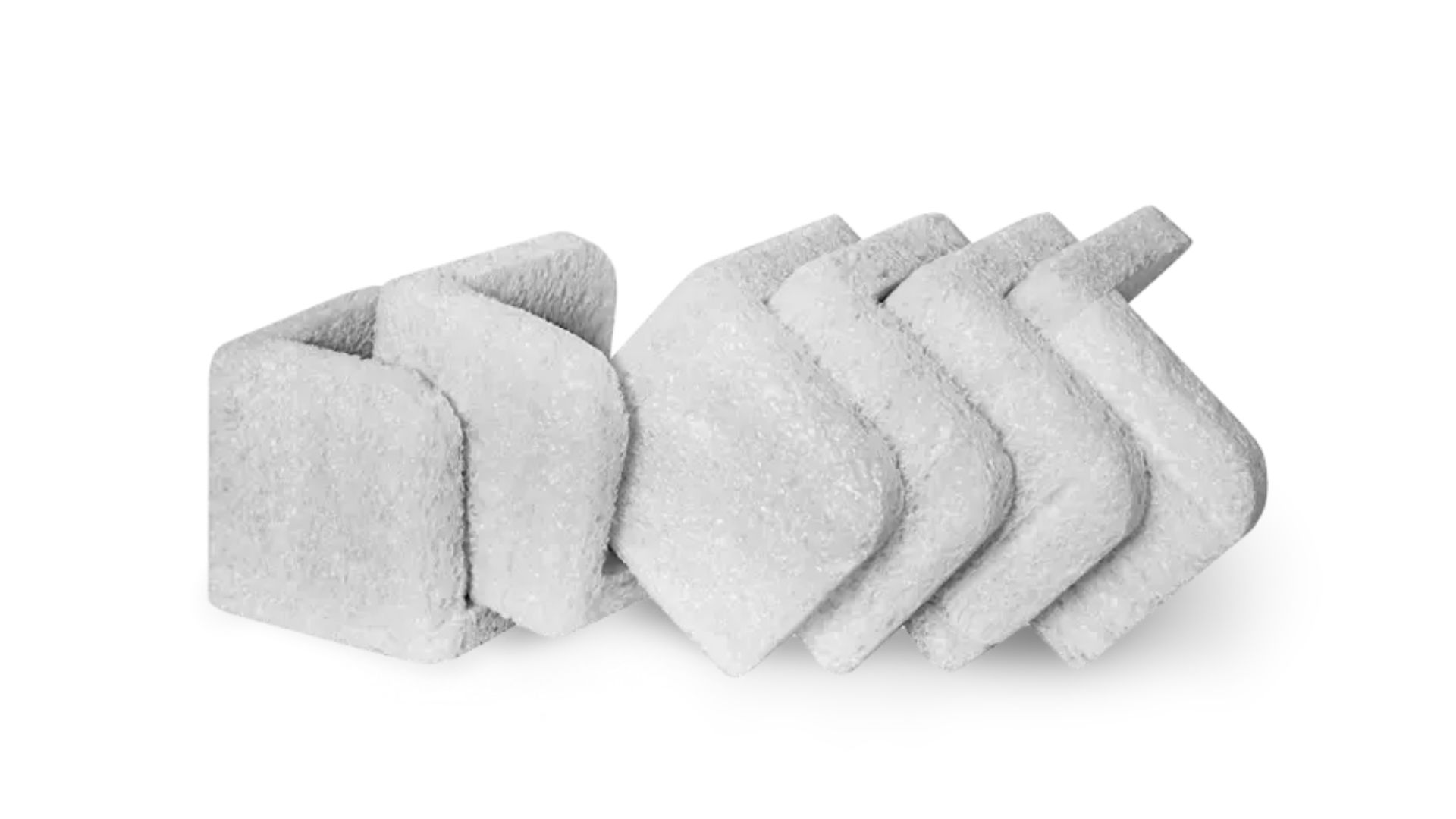
Photo from Cruz Foam
Moving on from mushrooms, California-based startup Cruz Foam is reimagining upcycled shrimp and other food waste to create an EPS alternative that biodegrades 99% faster than conventional EPS. The foam is made of 70% upcycled food waste, relying on chitin (a biopolymer found in crustacean shells) for structural strength and to maintain the performance levels of conventional EPS.
Cruz Foam has three primary products:
Cruz Cool: for cold chain packaging and shipping solutions—offering 48+ hour thermal protection
Cruz Foam: for “block and brace” shipping solutions and more—ideal for consumer electronics
Eco Vino: a packaging solution for the wine industry made of Cruz Foam and recycled corrugated fiberboard
According to Cruz Foam’s Impact site, Cruz Foam meets the ASTM 6400 standard for industrial compostability, breaking down in 103 days (a blip compared to styrofoam’s 500+ years). Cruz Foam is also home compostable, as it is made primarily of food waste. The site notes that the foam is “Lomi Approved,” meaning that it turns into soil in just four days in a Lomi countertop composter. Cruz Foam is also proud to be the first ever product to score 100% on the Lomi certification process, making it a champion of home compostable packaging and the ONLY Lomi-approved packaging solution on the market to date.
Despite launching in 2017, Cruz Foam has already made a mark on the packaging industry, attracting investment from celebrities like Leonardo DiCaprio and Ashton Kutcher as well as as being included in TIME’s Best Invention list for 2023.
Learn more about Cruz Foam and their revolutionary packaging materials here.
Green Cell Foam by TemperPack
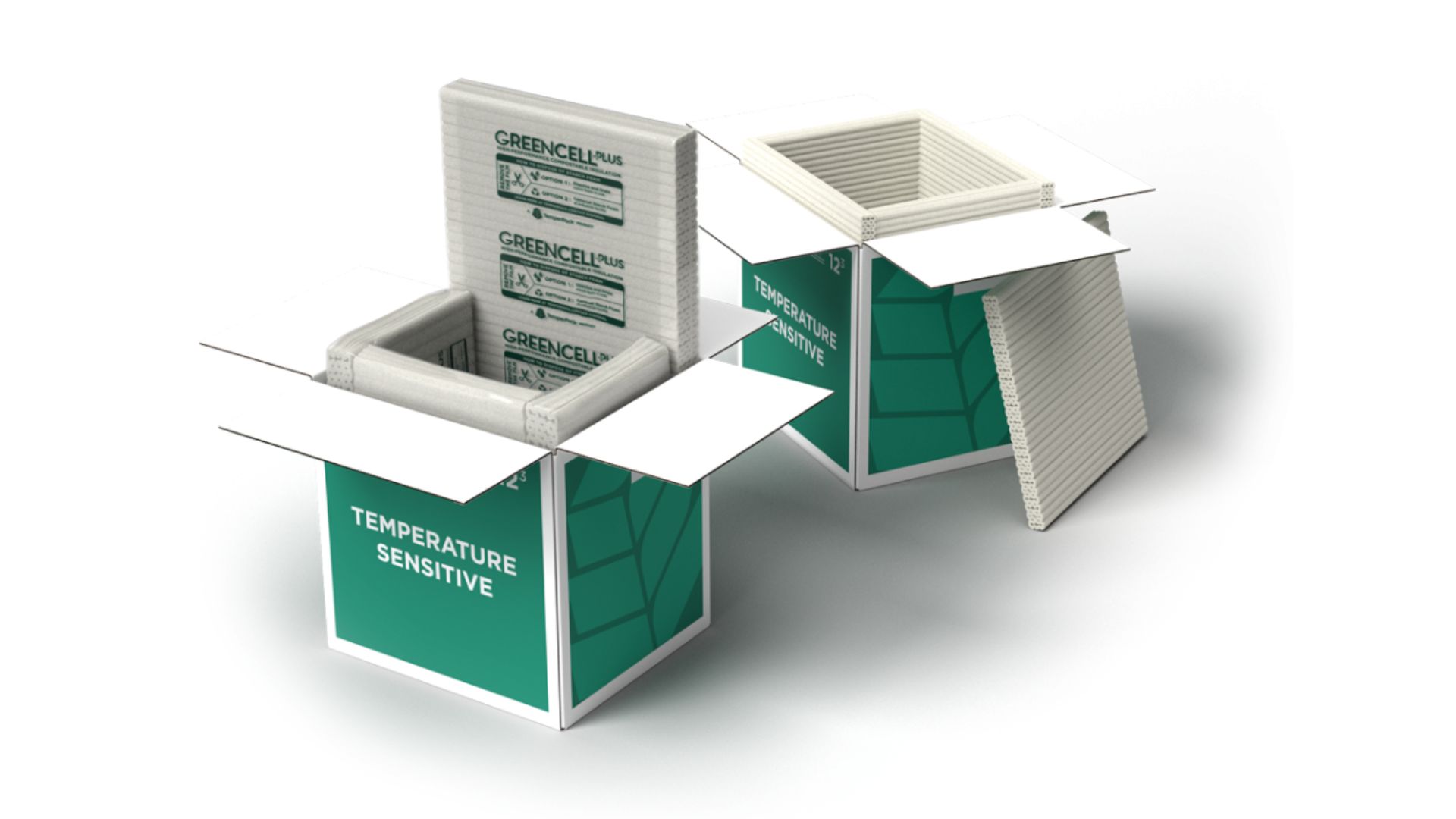
Photo from TemperPack
Similar to Cruz Foam, US-based TemperPack also released a plant-based foam that provides an alternative to styrofoam, with their Green Cell Foam. Green Cell Foam is a home compostable foam with qualities similar to EPS, but instead of synthetic polymers, TemperPack uses corn starch sourced in the US.
What makes Green Cell Foam special is that it can be composted at home, dissolved in a kitchen sink, and has an array of certifications, including:
TUV Austria Home | Ok Compost
TUV Austria Industrial | Ok Compost
ISO 14853—verified for aqueous anaerobic biodegradation
USDA® Certified BioBased product
TemperPack claims that Green Cell Foam is the only “high performance, drain safe, certified home compostable alternative to EPS.”
Learn more about Green Cell Foam here.
Seaweed Packaging by Notpla
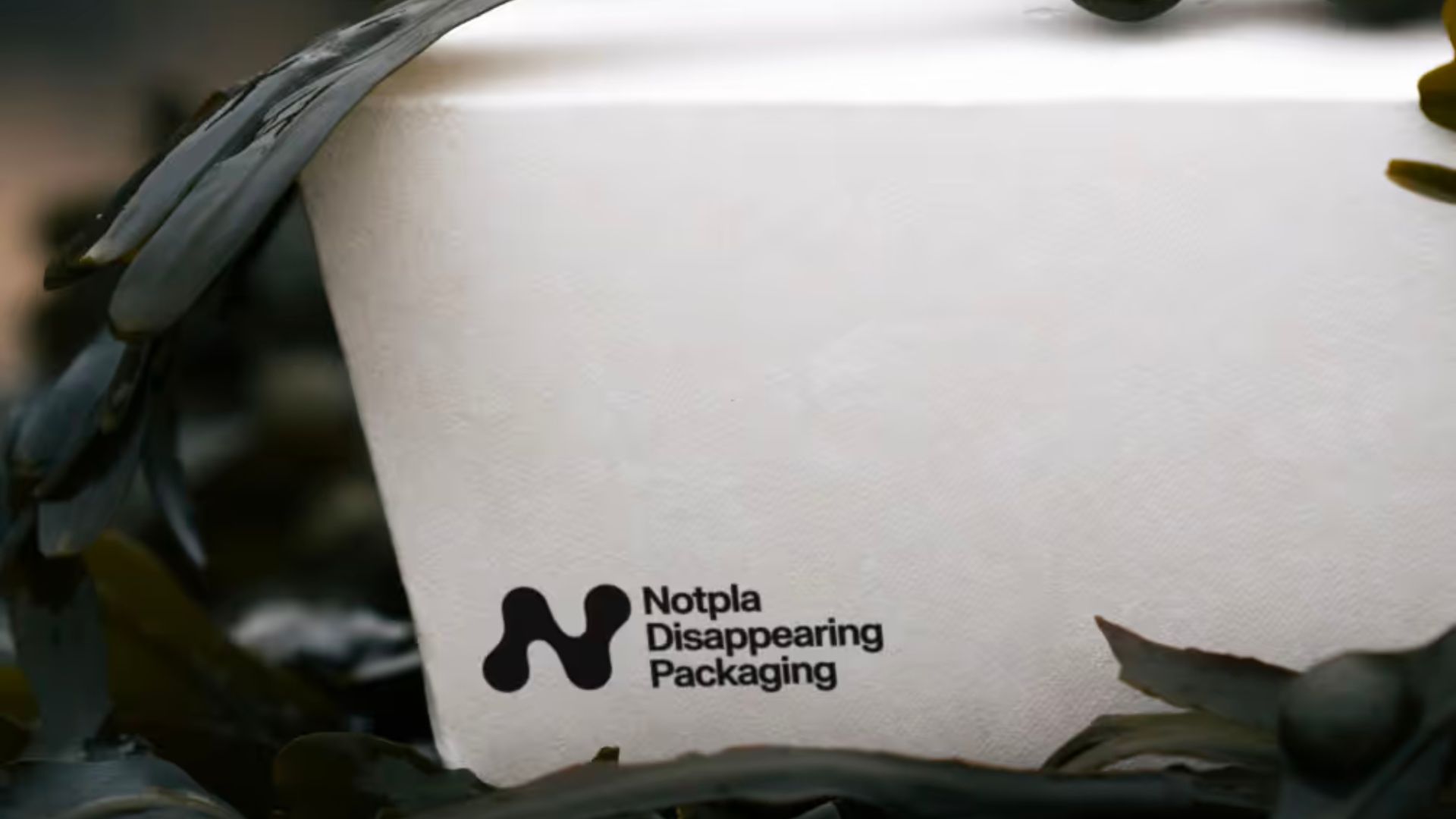
Photo from Notpla
As we highlighted above, eleven states and Washington D.C. have banned EPS in food service applications, creating a demand for alternatives. London-based Notpla has been making waves in the packaging industry since launching their seaweed packaging solutions in 2014.
Notpla’s seaweed packaging has numerous applications, including:
Food containers
Cutlery
Energy gel pods and sachets
Paper
Laundry sachets
Notpla’s seaweed-based food containers are made of bipolymers found in seaweed and contain a 100% natural seaweed coating, allowing it to compost like a “fruit peel” at the end of its useful life. The packaging is home compostable and recyclable in paper waste streams, containing no PFAS or toxic components.
Based in Europe, Notpla also ensured the packaging is compliant with the EU’s Single Use Plastic Directive which works to reduce the “volume and impact” of ten different types of single use packaging, including food containers.
Despite its origins only a decade ago, Notpla claims to have already replaced “3.5 million units of plastic food containers.” Their innovation has not gone unnoticed, winning the famed Earthshot Prize in 2022, receiving recognition and a visit from Prince William.
Read more on Notpla and their work to pioneer seaweed packaging solutions here.
Learn to evaluate EPS Alternatives
As we’ve explored, sustainable alternatives to EPS are rising, driven by consumer demand, bans, and looming EPR laws. When looking to replace EPS with a solution made from mycelium, chitosan, seaweed, and more, it’s important to use a data driven approach to compare the associated environmental impacts from cradle to grave—this can be achieved through a life cycle assessment (LCA).
One of the modules in our online Certificate of Sustainable Packaging (CSP) program is focused on teaching you how to evaluate your packaging systems using an ISO-14040 verified LCA software designed to analyze primary, secondary, and tertiary packaging systems. Learn more here.
By signing up you indicate you have read and agree to our Terms of Use. Packaging School will always respect your privacy.
