
China’s 15th Five-Year Plan: What It Means for Sustainable Packaging
China’s “Five-Year Plans” Explained
Since 1953, China has worked to foster social and economic development through a series of Five-Year Plans. Think of the plans as broad policy frameworks that establish goals and targets for achieving national priorities, typically centered on economic and social development.
Through these Five-Year Plans and other initiatives, the nation has experienced one of the most dramatic economic transformations in history, particularly at the turn of the 21st century.
Highlights of this growth include:
Between 1990 and 2025, China’s real GDP grew at an average annual rate of approximately 8.5%–9%, peaking at 14.2% in 2007. Although annual GDP growth slowed to 5% in 2025, it remained higher than that of many major economies. (WorldBank)
Between 1990 and 2024, exports of goods and services increased from $49.13 billion USD to $3.83 trillion USD—a growth of approximately 7,696%. (WorldBank)
Over the last 40 years, China lifted nearly 800 million people out of extreme poverty (defined as living on less than $1.90 per day). (WorldBank)
In 2024, China accounted for 19.3% of global GDP (adjusted for purchasing power parity), up from just 3.6% in 1990. (Statista)
With plans to build upon this growth, the newest iteration was approved in March 2026, marking the 15th Five-Year Plan, which outlines the nation’s development from 2026 through the end of the decade in 2030. As one might imagine, the plans are dense and span interconnected policy objectives.
The World Economic Forum summarized the main themes from the 14th Five-Year Plan (2021–2025) in an article earlier this year, including:
Modern socialist nation-building
Innovation-driven development
Industrial upgrading
Domestic market expansion
Digitalization
Socialist marketing economy
Rural revitalization
Urbanization
The newest plan has similar themes, but leans further on innovation, R&D, and digitalization of emerging (e.g., AI) and traditional sectors (e.g., manufacturing). The 15th Five-Year Plan spans 18 parts and 62 chapters. With our focus on packaging and the circular economy, we are particularly interested in where those goals appear within the plan—Part 13: Accelerating the Comprehensive Green Transformation of Economic and Social Development and Building a Beautiful China.
The remaining 17 parts of the plan can be viewed here.
As a leader in online professional development for the packaging industry, our team paid close attention to the packaging-related initiatives outlined in the Circular Economy Development plan. Released in July 2026, this subplan supports the implementation of the circular economy priorities discussed in Part 13 of the broader Five-Year Plan.
In the rest of this article, we examine the packaging-related targets and themes outlined in the Circular Economy Development plan, drawing from the Ellen MacArthur Foundation’s English translation of the subplan.
Broader Circular Economy Goals for 2030
Before exploring the packaging-specific goals in the Circular Economy Development plan, let’s review some key targets related to the development of a circular economy as a whole. The document notes that, by 2035, the Chinese government projects that a "high-quality circular economy development system will be fundamentally established, and the utilization efficiency of major resources will reach global leading levels."
In order to achieve these goals by 2030, the Chinese government plans to:
Increase overall "resource productivity" by approximately 16% compared to 2025
Reduce energy consumption (per unit of GDP) by 10% compared to 2025
Reduce water consumption (per unit of GDP) by more than 10% compared with 2025
Increase the "annual comprehensive utilization" of bulk solid waste to 4.5 billion tonnes
Increase the "annual recycling utilization" of major secondary resources to 510 million tonnes
Expand the output value of the resource recycling industry to 8 trillion yuan ($1.18 trillion USD)
So, how does the packaging industry fit into these broader 2030 goals?
For starters, the packaging industry is a core component of virtually every industry in China (and every other country), especially given China’s reputation as a manufacturing powerhouse. Goals related to reducing energy and water consumption will require the packaging industry to play its part by adopting new approaches, such as renewable energy use in production and closed-loop water recycling at production sites.
The focus on water and energy in the packaging industry is apparent in many sustainability reports and life cycle assessment tools, where water, energy, and emissions are typically the impact categories of focus for many packaging teams.
Additionally, while packaging makes up a smaller portion of "bulk solid waste" and "major secondary resources" compared to other industrial sectors, the transformation of packaging waste into new raw material inputs through recycling and other approaches will be a lever to achieve Goals 4 and 5.
The same can be said for Goal 6. Recycled packaging components (e.g., rPET and recycled paper) will likely account for a notable share of China’s resource recycling industry, helping the nation achieve its target of 8 trillion yuan in output value by 2030.
While packaging is often viewed by many as a secondary or supporting industry for larger manufacturing sectors, packaging players in China have a unique opportunity to drive innovation in support of the nation’s broader 2030 goals.
The remainder of the Ellen MacArthur Foundation PDF is divided into seven distinct sections with numerous subsections. The seven main sections include:
Comprehensively Strengthening the Foundation for Waste Reduction
Accelerating the Improvement of Resource Utilization Efficiency
Continuously Expanding Reuse and Secondary Utilization
Effectively Improving Waste Collection Networks
Vigorously Promoting the Upgrading of the Circular Economy Industry
Strengthening Industrial and Policy Support
Strengthening Implementation and Coordination
The sections shown in bold explicitly include packaging-related targets within their respective subsections. While all circular economy goals loosely relate to and rely on packaging (as demonstrated above), the rest of this article will focus on the goals that are explicitly tied to packaging.
Beyond the broader goals for 2030, the remainder of the document is largely qualitative in nature, especially when it comes to the packaging-related plans.
Packaging’s Role in Strengthening the Foundation for Waste Reduction
The first section, Comprehensively Strengthening the Foundation for Waste Reduction, includes several packaging-related goals.
Color-Minimization in Packaging Printing
Under the subsection Promoting Green Product Design, one packaging-related goal is to "encourage reduction-oriented and color-minimization design in packaging printing."
Interestingly, China begins its initiatives with a focus on minimizing color in packaging printing and design. This emphasis is likely driven by several factors.
Byproducts of oil production (particularly naphtha) are essential to the creation of inks for packaging and other applications, making this often overlooked component of packaging rather carbon intensive. However, the environmental impacts of conventional inks extend beyond their carbon footprint. Carbon-based inks can impact the recyclability of packaging, introduce heavy metals that contribute to ecosystem and human toxicity, and lead to the emission of volatile organic compounds (VOCs).
Therefore, reducing the use of ink in packaging can lessen these externalities and further protect China’s economy from global supply chain disruptions that might impact naphtha availability.
While our team supports any initiative that reduces externalities without compromising packaging efficiency or performance, we hope that store shelves from Beijing to Chengdu retain their sense of wonder in a potential future with less color. Our very own Mitch Webster (author of this piece) was just in Beijing in April where he captured the photo below in a 7-Eleven.
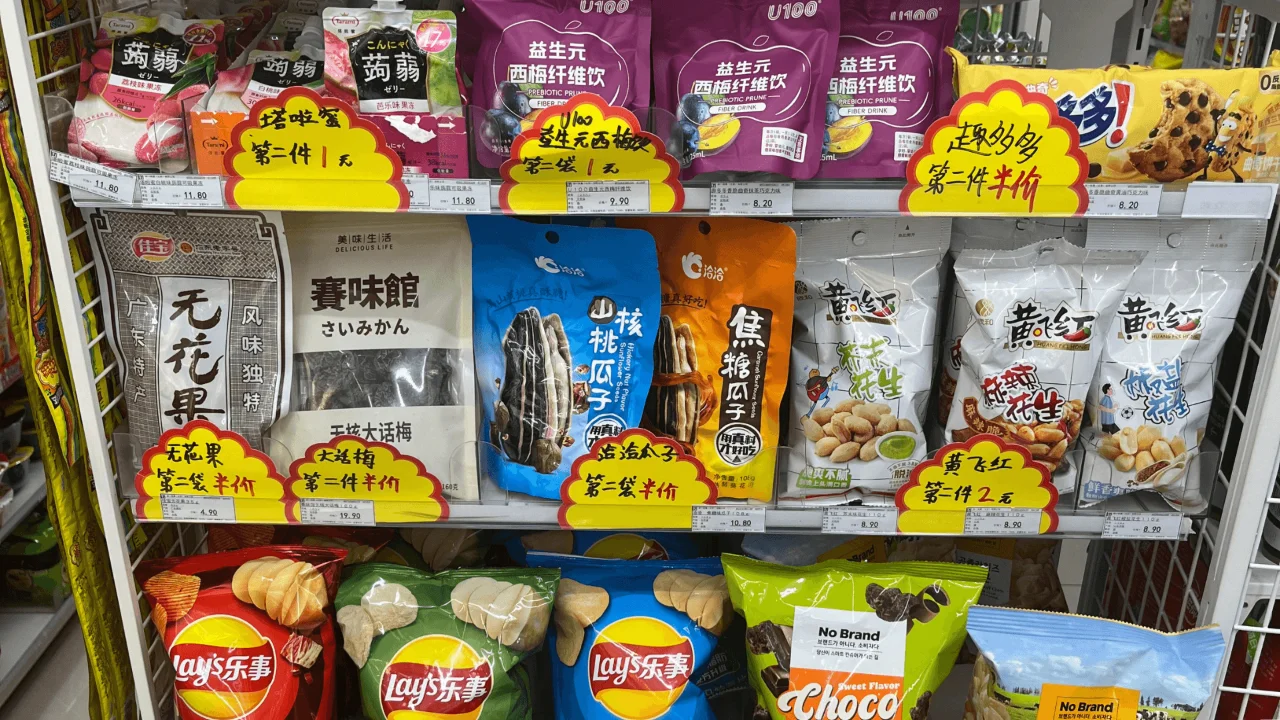
The plan does not call for the expansion or adoption of carbon-free inks and alternatives like vegetable, wood, or algae-based inks. With the wider plans focused on R&D, this will likely be pursued in the background. Perhaps the time is right for researchers in China to come up with a new cost-effective carbon-free ink tied to Goal 4: Increase the "annual comprehensive utilization" of bulk solid waste to 4.5 billion tonnes.
This subsection also includes goals for "green design guidelines" and standards for consumer products and other sectors. These efforts may eventually extend to packaging—particularly in consumer-packaged goods categories where we like to say "the primary packaging is the product" (think a deodorant stick).
This subsection also includes goals for "green design guidelines" and standards for consumer products and other sectors. These efforts may eventually extend to packaging—particularly in consumer-packaged goods categories where we like to say "the primary packaging is the product" (think a deodorant stick).
Packaging-related goals appear more frequently in the subsection Promoting Green Consumption across Society than in any other subsection of the plan. They are stated as follows:
Increase efforts to promote green and low-carbon products
Advance full-chain management of plastic pollution
Promote the substitution of plastics with bamboo-based alternatives (bamboo instead of plastic)
Strengthen the governance of excessive packaging of commodities
Promote the green transformation of express delivery packaging
The first two goals are more broadly tied to packaging than the subsequent three, but let’s take a closer look at them first.
Again, any plans to "Increase efforts to promote green and low-carbon products" will eventually involve packaging. This is even more relevant to fast-moving consumer goods (FMCG), where the primary packaging is often inseparable from the function of the product itself (e.g., a bottle of tea).
The same is true of the second goal to "Advance full-chain management of plastic pollution." While this goal calls for management of all plastic pollution, it is no secret that plastic packaging (especially for consumer products) is a large driver of plastic pollution in both terrestrial and aquatic ecosystems around the world.
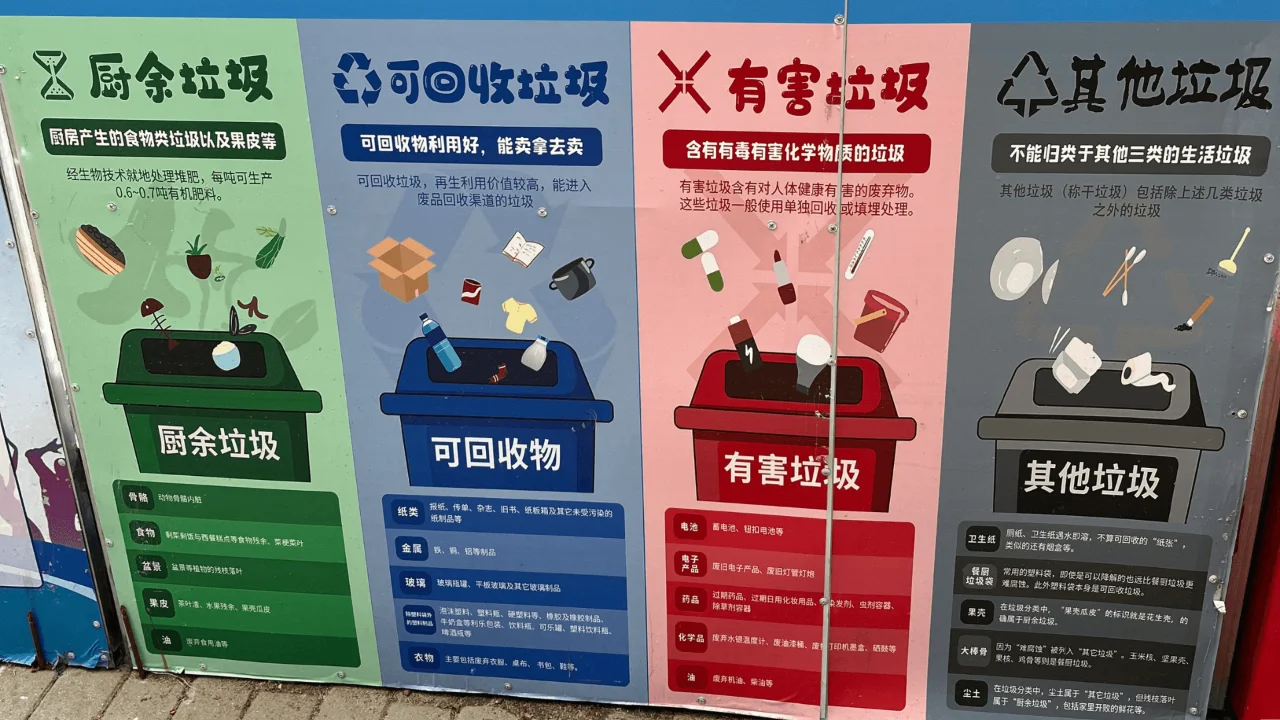
While there is no explanation of what "full-chain management" means with regard to fighting plastic pollution, our team interprets it as encompassing the collection and processing of plastics across industrial, commercial, and residential settings.
Webster took the photo below illustrating a residential waste management system (which appears to be broken into multiple streams) during his April Beijing visit.
Expanding the Use of Bamboo-Based Bioplastics
Now, onto the packaging-specific goals, and we will start with a rather exciting one. China is exploring the use of "bamboo-based alternatives" to conventional plastics, including those used in packaging.
While no specific biopolymer or particular bamboo-based bioplastic is mentioned, our team flagged an innovation developed at China’s Northeast Forestry University that might play a key role in this transition.
Interesting Engineering wrote on the University’s efforts to pioneer bamboo-based bioplastic in the fall of 2025, highlighting properties like:
Better thermal stability than oil-based plastics
Comparable strength, shapeability, and machine integration to oil-based plastics
Biodegradation in soil within 50 days
Closed-loop recyclability while retaining 90% original strength
While the write-up on the University’s innovation does not specifically mention packaging, it does mention bamboo bioplastic (known as BM-plastic) was tested alongside poly-lactic acid (PLA) and polystyrene (a.k.a. styrofoam) for comparison—which points to potential adoption in packaging portfolios.
Our team comes across packaging material innovations from universities all the time—so much so that we published an article on the topic. Yet one question always remains: How does an innovation make the journey from a university lab to a commercially viable product?
China’s leadership has thought this through and created a foundation for moving ideas from the lab to supply chains. One such effort is taking shape in the suburbs of the nation’s capital at the Beijing Economic-Technological Development Area.
Known as the BDA, or "Beijing E-Town," the zone was established in 1992 as a hub for research and development, economic growth, and innovation. Think of the BDA as a larger, more manufacturing-oriented version of North Carolina’s Research Triangle Park (RTP). Like RTP, the BDA’s areas of focus are fine tuned, focusing on four key themes: new-generation IT, new-energy intelligent automobiles, biotechnology, and robotics / smart manufacturing. From our understanding, R&D around bamboo-plastics likely falls into the biotechnology bucket.
Beyond serving as a key research, innovation, and industrial hub for Beijing and China, the zone is known for collaborating with leading Chinese universities, including Tsinghua University and Peking University, to turn laboratory research into market-ready solutions. This type of network will likely support the commercialization and development of Northeast Forestry University’s BM-plastic, especially since China’s National Forestry and Grassland Administration (NFGA) launched a three-year plan to promote and scale the adoption of bamboo-based plastics.

Aside from the environmental benefits of replacing conventional plastics with bamboo-based plastics (e.g., less emissions and fossil fuel extraction, compostability, toxicity), the focus on bamboo as a feedstock for plastics also strengthens the 15th Five-Year Plan’s approach to self-reliance.
The link lies in China’s abundant bamboo resources and its established ecosystem for processing the material and commercializing bamboo-based products. The Global Times notes that bamboo covers 7.56 million hectares in China—an area roughly the size of Panama.
The bamboo industry in China is active in 20 provinces and reported an annual production of 150 million tons of "bamboo materials" in 2023. Over 10,000 processing sites operate in these provinces, supporting an industry that grew from 82 billion yuan (~$12 billion USD) in 2010 to 415.3 billion yuan (~$61.3 billion USD) in 2022—a more than fivefold increase in 12 years.
Governing Excessive Packaging in Commodities
The next packaging-specific goal under the subsection Promoting Green Consumption across Society is to "Strengthen the governance of excessive packaging of commodities."
As China strengthens its position as a leading exporter of commodities and goods, its focus appears to be on rightsizing and optimizing the packaging systems that support products throughout their journey from raw material extraction to the consumers’ hands.
While this initiative might seem less exciting than integrating bamboo-based bioplastics, small changes to a package’s size or weight can have a major impact at scale.
To illustrate, let’s examine the primary packaging used for jasmine tea sold in both physical and online marketplaces in China. Conveniently, Webster picked up this package of jasmine tea during a visit to the Temple of Heaven in Beijing.
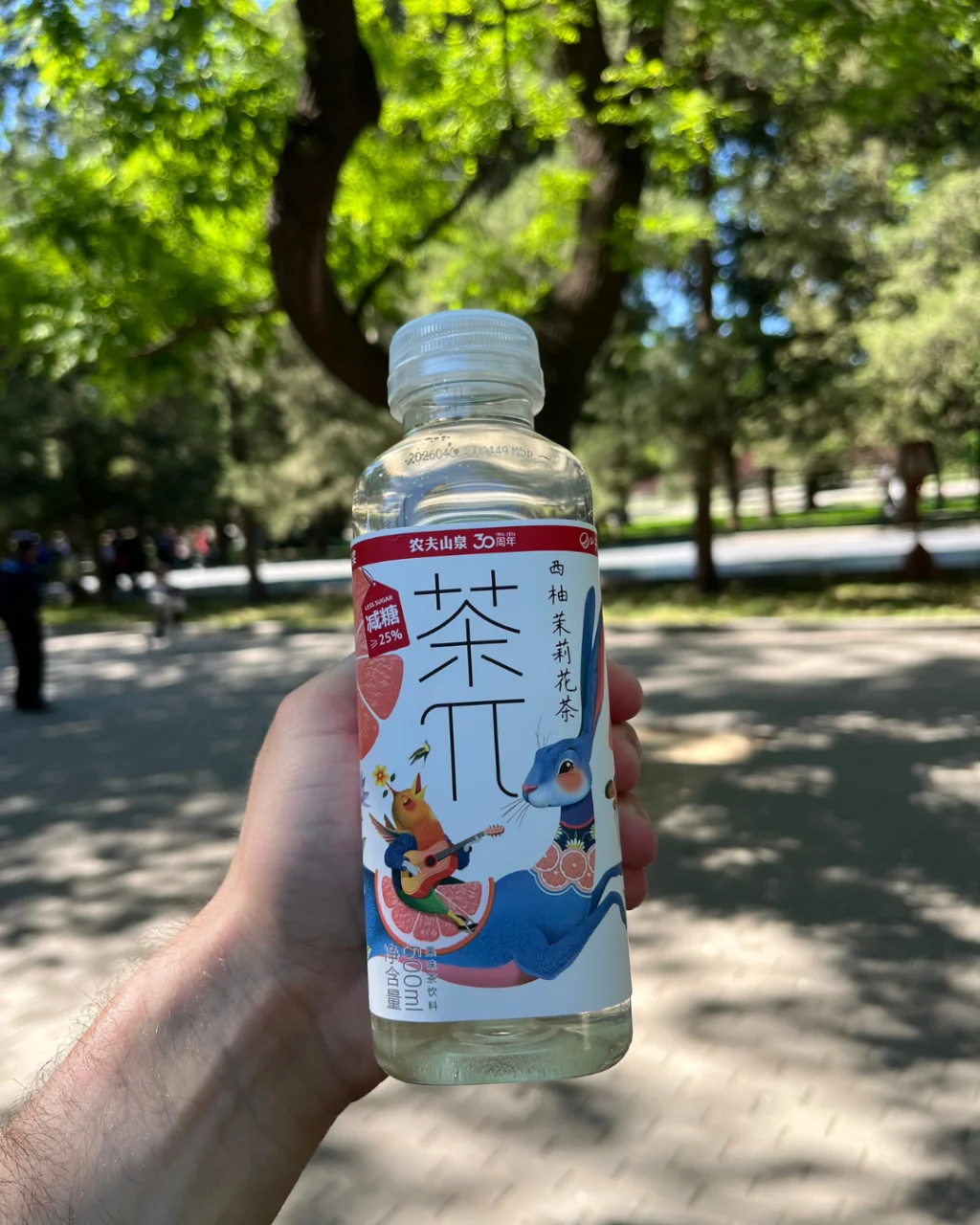
Let’s say a PET bottle of jasmine tea sold in a vending machine contains 16.9 fluid ounces (fl oz) of tea and weighs 20 grams (0.044 pounds). While sales remain consistent, the packaging R&D team redesigns the bottle to use less PET, reducing its weight from 20 grams (0.044 pounds) to 17 grams (0.037 pounds) while still maintaining the same 16.9 fl oz capacity.
While this might seem like a small change on a per-bottle basis, selling 1,000,000 units would reduce PET use by roughly 6,600 pounds. This would lessen environmental externalities—including raw material use, CO2 emissions and water use—while also reducing extended producer responsibility (EPR) fees, which are often assessed on a per-pound basis.
Now consider an online marketplace scenario. A consumer in Shenzhen orders a six-pack of the same jasmine tea on JD.com for delivery to their apartment complex. In this case, excess packaging may be associated with the secondary packaging—the corrugated fiberboard (cardboard) shipping box.
Upon arrival, the consumer notices an excessive amount of dunnage and a shipping box that is much larger than necessary to deliver the tea safely.
Under the new plan, this type of excess packaging is exactly what China’s regulators are aiming to curb. By encouraging platforms like JD.com to optimize secondary packaging, such as corrugated shipping boxes, the plan seeks to reduce waste, lessen environmental externalities, and advance the nation’s broader circular economy goals.
Optimizing Express Delivery Packaging for Sustainability
The final packaging-specific goal under the subsection Promoting Green Consumption across Society is to "Promote the green transformation of express delivery packaging."
Delivery services for food and other goods, like Meituan, are foundational to China’s economy. Meituan alone reported 770 million transacting users in fiscal year 2024—more than twice the population of the United States and equivalent to roughly 55% of China’s population.
Meituan and other delivery apps are often integrated into larger e-wallet and lifestyle apps, like Alipay and WeChat, enabling consumers to order food, book train tickets, make payments, and browse social media without leaving the platform.
The picture below, taken by Webster, shows one of the secure drop boxes in Beijing that Meituan delivery drivers use to leave customer orders.
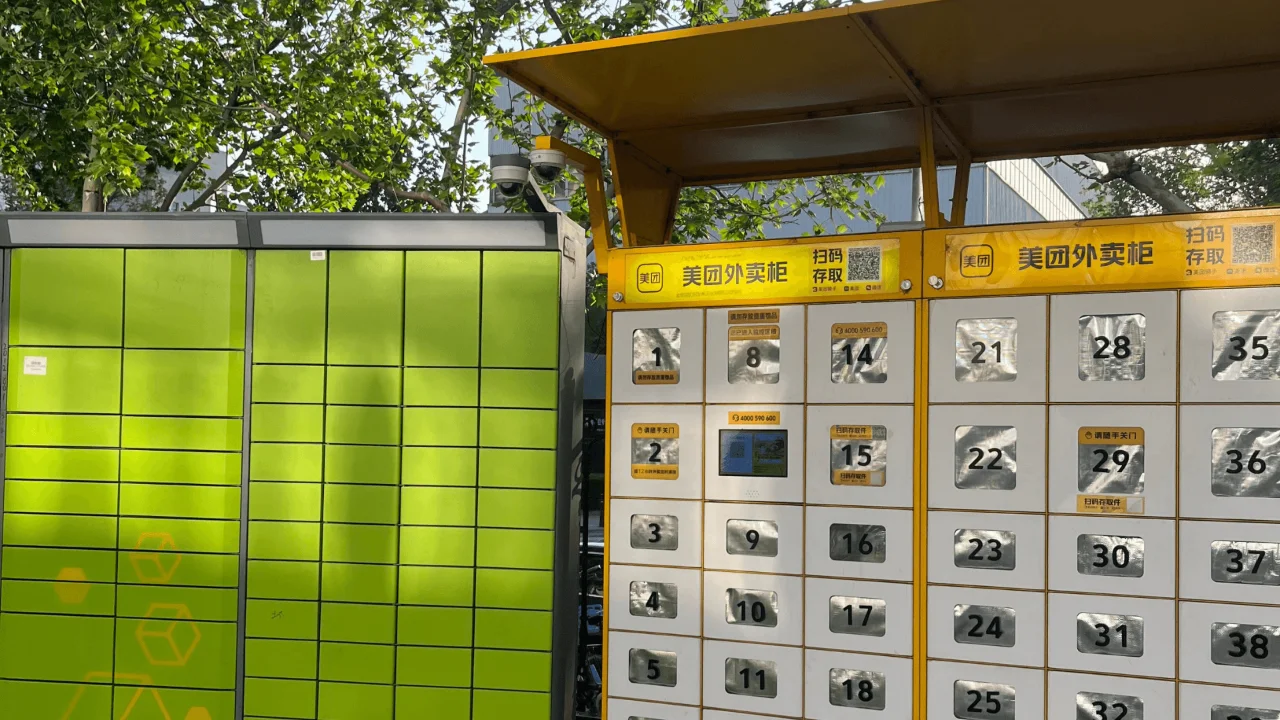
With more consumers relying on express delivery apps in their daily lives, China has zeroed in on reducing the environmental externalities of the packaging systems that support these transactions. This initiative will likely require collaboration between the state, Meituan’s network of 14.5 million annual active merchants (2024), and major packaging players across the nation.
Like many of the other packaging-related goals in the Circular Economy Development subplan, this goal is qualitative in nature and does not provide a working definition of "green transformation." Based on the other goals we’ve discussed, however, our team believes it may encompass themes such as:
Increasing the recyclability and post-consumer recycled (PCR) content in packaging
Swapping single-use plastics with bamboo-based bioplastics (where suitable)
Focusing on rightsizing and reducing excess / unnecessary packaging
Reducing the use of color and ink in packaging design for primary, secondary, and tertiary systems
Investing in R&D at BDA and other institutions to find solutions to optimize express delivery packaging
Aligning designs and systems with extended producer responsibility (EPR) and other packaging and recycling policies
With express delivery playing an integral role in China’s economy, initiatives in this area have the potential to drive impact at scale while reinforcing other packaging and circular economy initiatives.
Packaging’s Role in Strengthening Institutional & Policy Support
The only packaging-specific goal in this section appears under the subsection Improving the Legal & Regulatory Framework: "Further implement the Extended Producer Responsibility (EPR) system."
Our team first covered the status of China's extended producer responsibility (EPR) for packaging in 2024 as part of our broader EPR for Packaging Around the World article. At the time, the program was still under development.
It makes sense that China is now focused on expanding and implementing its EPR framework, as producer-paid fees can help fund and accelerate many of the other packaging and circular economy goals discussed throughout this article.
While China has a number of laws and programs governing recycling and solid waste management (including packaging), the foundation of its packaging EPR framework lies in the 2020 Law on Prevention and Control of Environmental Pollution by Solid Waste.
Given our team’s focus on tracking and reporting on packaging EPR programs around the world, we’ll be following this goal closely and plan to publish a follow-up article as more information becomes available.
While the systems, economies, and policy landscapes are different, our recent article on the impact of Oregon’s packaging EPR program after its first year demonstrates what packaging EPR can deliver. Read more here.
Major Packaging Players to Support the Transition
Beyond the goals outlined in the Circular Economy Development plan, several packaging producers in China are already advancing many of these priorities through their products and innovations.
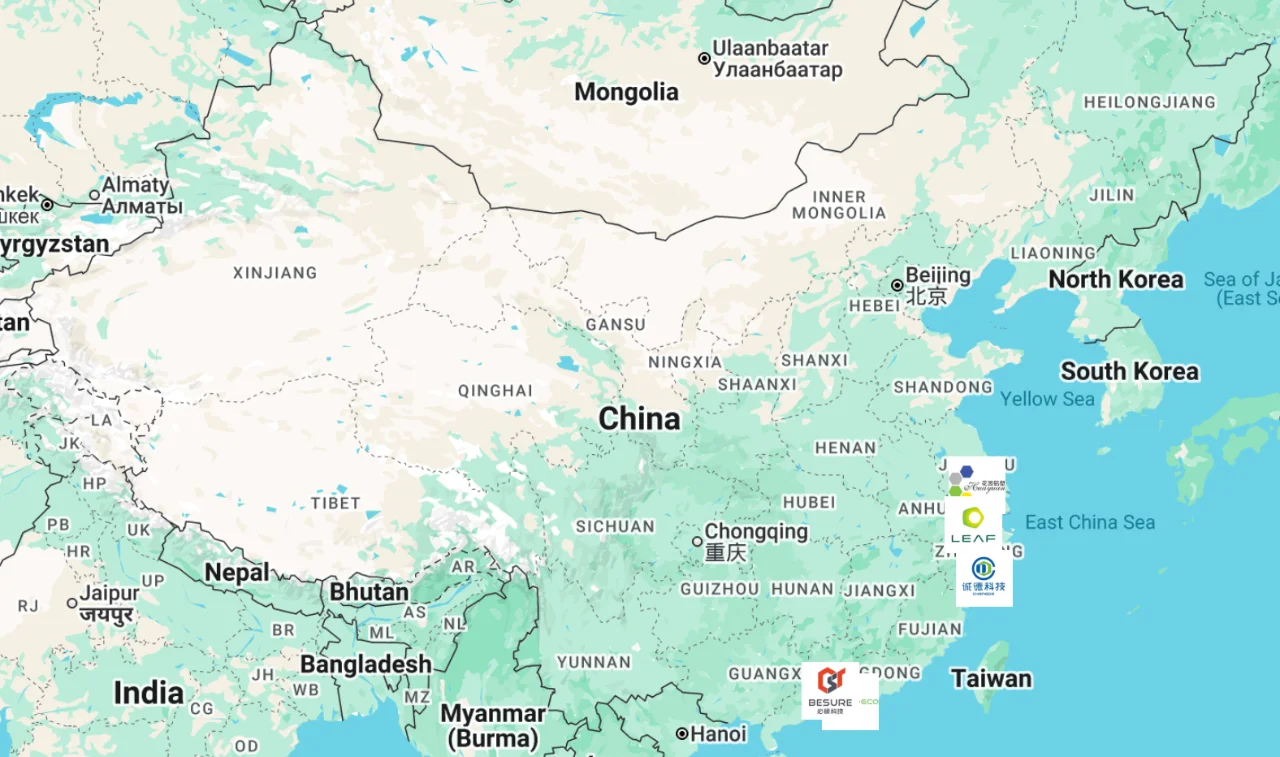
Our team first came across these companies in a Packaging Europe article published earlier this year. While they represent only a small sample of China’s sustainable packaging ecosystem, we wanted to highlight five companies whose work aligns with many of the goals discussed throughout this article:
YUTOECO: Based in Shenzhen, YUTOECO specializes in developing home-compostable packaging materials made from plant fibers and other alternative materials. Although founded in 2020, the company has quickly established itself as a notable player in China’s circular economy transformation.
Chengde Technology Co., Ltd: Based in Wenzhou, Chengde Technology specializes in flexible packaging solutions, including MDO-PE films, mono-material PE and PP structures, PCR materials, and biodegradable packaging.
Jiangyin HuaYuan Aluminum-Plastic Pack CO., LTD: Based in Jiangyin, the company specializes in aluminum packaging production, particularly pre-cut aluminum lids for CPG sectors, with a strong emphasis on recyclability innovation and R&D.
BeSure Technology Co., Ltd.: Based in Foshan, BeSure Technology specializes in recycled and degradable molded pulp materials, with a major focus on R&D and a portfolio of over 100+ patents in the space.
Leaf Bio: Based in Hangzhou, Leaf Bio specializes in plant-based and alternative materials for packaging and other applications. Its packaging innovations include ECOPEF®, a next-generation plant-based fiber that serves as an alternative to conventional PET.
As China's leadership implements the Circular Economy Development plan, the five companies highlighted above appear well positioned to support many of the packaging-related initiatives discussed throughout this article. Beyond these examples, additional startups and established companies will likely emerge to fill gaps, drive innovation, and support systems-level change at scale.
Learn More About Sustainable Packaging & LCA
Whether your organization’s sustainable packaging goals are as ambitious and system-wide as China’s or focused on smaller-scale improvements, The Packaging School has online training solutions to support your sustainability journey.
Sustainable packaging optimization is a game of trade-offs, requiring organizations to balance material choices and packaging systems with broader sustainability goals. Our team often says there is no such thing as a "sustainable packaging material" because every material carries its own environmental and social externalities and performance trade-offs.
One of the best ways to evaluate and communicate these trade-offs—and select packaging materials that support broader sustainability goals—is through a comparative life cycle assessment (LCA).
Never conducted one? Don’t sweat it.
In our online, self-paced Certificate of Sustainable Packaging program, you’ll learn how to conduct a comparative LCA using three different cereal packaging systems. By the end of the program, you’ll be equipped to serve as your organization’s subject matter expert in LCA and sustainability reporting.
Reach out to Mitch@packagingschool.com to learn more about the program.
By signing up you indicate you have read and agree to our Terms of Use. Packaging School will always respect your privacy.
