
Exploring Smart Packaging Solutions: Active vs. Intelligent
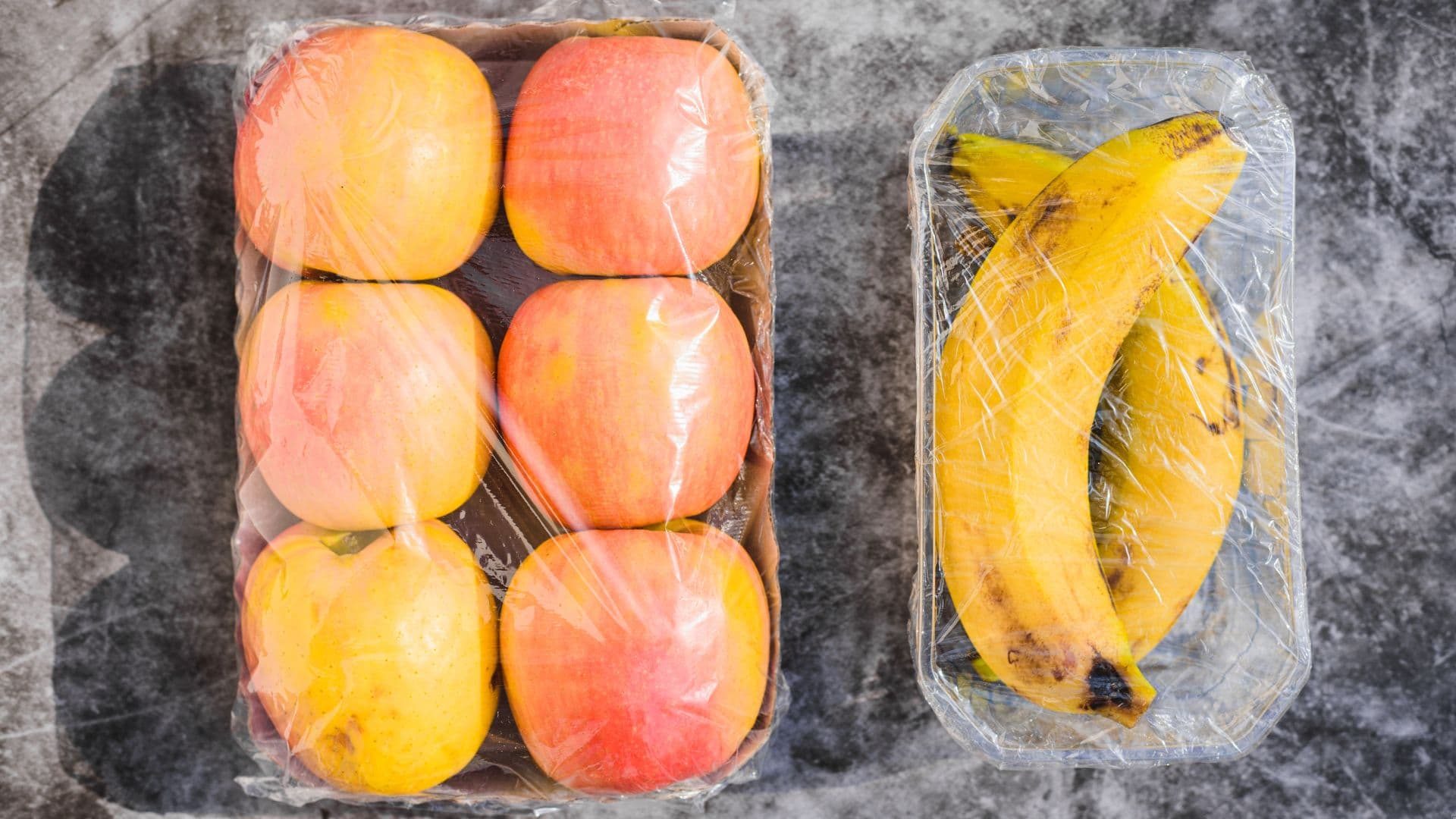
If you stroll through any grocery store in the United States and abroad, you’ll likely find a considerable amount of the products packaged in plastic. Products from meat and dairy to fresh fruit and vegetables have special considerations that call for the use of plastic packaging such as shelf life, moisture resistance, safety, and more.
While the recycling rates for plastic packaging leave much to be desired, many food and beverage supply chains would struggle to function without plastic. Plastic packaging (and other types of food packaging) is a foundational tool in the global fight against food waste and spoilage.
According to the USDA’s Economic Research Service, 30–40% of the total food supply in the United States is wasted each year due to issues with spoilage. And 31% of that food waste happens at the retail and consumer levels. This number would likely be much higher without the help of plastic packaging, but even so, retail locations have an uphill climb fighting the food waste battle.
While conventional plastic packaging is already doing its part to prevent waste, packaging engineers and food scientists are working to develop stronger solutions to further stop spoilage by actively changing the environment inside packaging and communicating key information to consumers. These types of solutions are referred to as smart packaging.
Smart packaging is an umbrella term for packaging systems with technology that communicates product (and recycling) information to the consumer through sensors and QR codes, extends the shelf life and product safety, and enhances tracking through a product’s life cycle.
Throughout this article we will provide an overview of smart packaging and the two key areas within smart packaging—active and intelligent packaging. To distinguish between the two, we will provide 12 examples of different technologies deployed within both active and intelligent packaging solutions.
Active Packaging
Active packaging utilizes packaging materials containing agents and technology that ACTIVELY extend product shelf life by absorbing or emitting certain volatiles, maintaining moisture levels, and reducing microbial growth. While used for many types of food packaging, active packaging is commonly found in agricultural and meat packaging.
Active packaging has two different formats:
Active Scavenging Systems (Absorbers)
Active Releasing Systems (Emitters)
Absorbers
Absorbers: Freshness Sachet
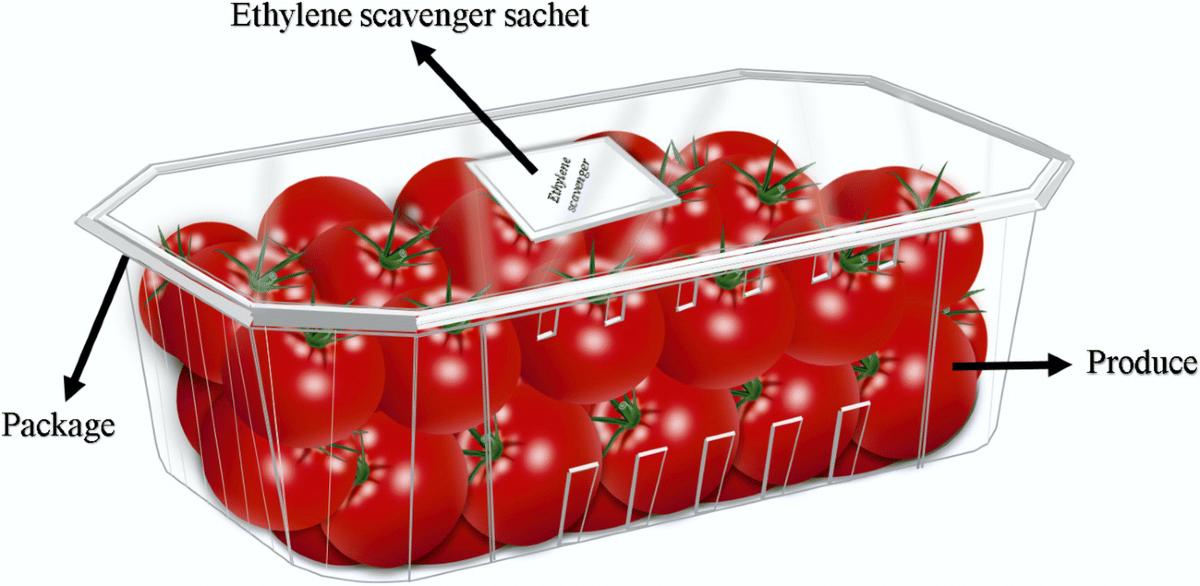
Freshness sachets are a widely used example of active packaging technology. They work to hinder the dispersion of ripening-slowing vapors, ensuring produce stays fresh as long as possible.
Another name for freshness sachet is ethylene absorber, as these sachets absorb ethylene which accelerates ripening and aging in produce. The benefits of this technology include reducing ripening and senescence, extending the quality of the product and shelf life.
Absorbers: Moisture Scavenger
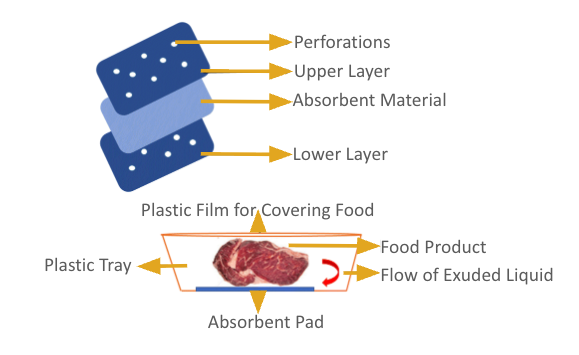
Another example of an active scavenging system (absorber) is a moisture scavenger. Moisture scavengers are typically found in packaging for products like mushrooms, tomatoes, strawberries, maize, grains, fresh fish, and meat.
These scavengers come in two forms:
RH controllers that scavenge humidity in the headspace (e.g., desiccants)
Moisture removers that absorb liquids (e.g., pads, sheets, or blankets placed under the fresh products)
Absorbers: Oxygen Scavenger
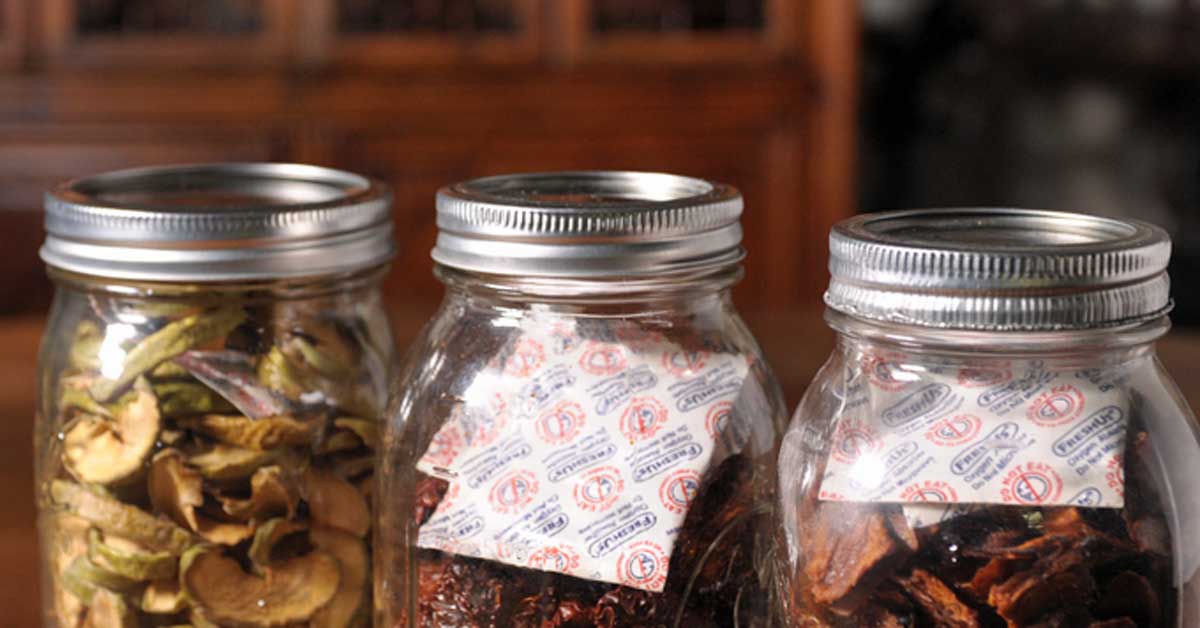
The last absorber we will cover in this piece is the oxygen scavenger. These scavengers are typically used for sliced (cooked) meat products, grated cheese, bakery products (par-baked), fruits and vegetable juices, seeds, nuts, and dried meat products—as seen in the image above.
Oxygen scavengers are used to remove residual oxygen present in food packaging at less than 0.01 percent volume.
Typically, the substance within the pouches that helps control oxygen levels is iron. But other substances like ascorbic acid and palladium are also common in oxygen scavenger technology.
Emitters
Emitters: Antioxidant Releaser
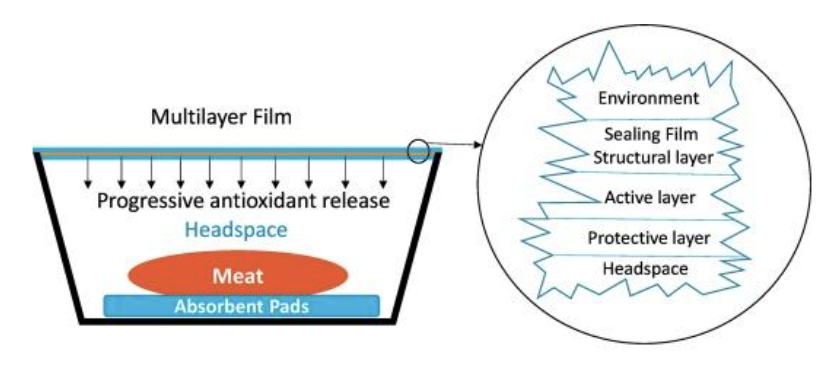
Pivoting from active scavenging systems (absorbers) to active releasing systems (emitters), we will first cover antioxidant releasers. These releasers help prevent lipid oxidation in products like fresh fatty fish and meat, seeds, nuts and oils, and numerous fried products.
When lipids in certain food products oxidize, this can lead to:
Shorter shelf life
Changes in taste and odor
Breakdown of texture and functionality in muscle foods
Reduced nutritional quality
Emitters: Carbon Dioxide Emitter
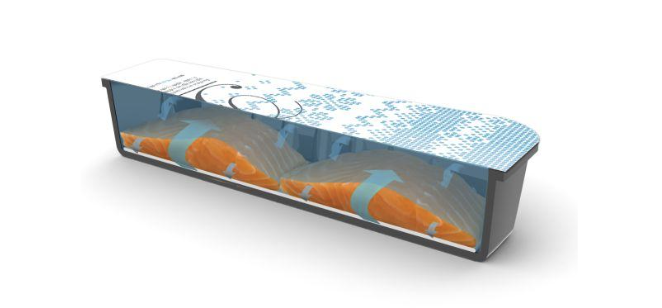
Carbon dioxide emitters work to release carbon dioxide in food packaging to extend microbiological shelf life and reduce head space volume of modified atmosphere packaging. Carbon dioxide emitters are typically used for products like fresh fish and meat.
These emitters typically come in the form of a pad or sachet and, in many cases, as a combined liquid absorber. The active ingredients inside the absorbent pad react when the pad absorbs liquid seeping out of the product, resulting in the release of CO2.
Emitters: Antimicrobial Packaging
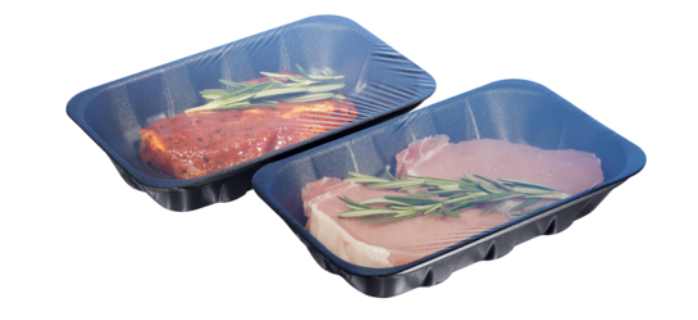
Antimicrobial packaging systems are designed to inhibit the growth of spoilage and pathogenic microorganisms to extend shelf life and maintain product quality and safety. These packaging systems can be found for products like fresh and processed meat, fresh and smoked fish, fresh fruits and vegetables, bakery products, and other ready-to-eat meals.
Common approaches for antimicrobial packaging include:
Antimicrobial sachets placed inside packaging
Packaging films and edible coatings incorporating antimicrobial substances
Modified atmosphere packaging (MAP), alone or in combination with other microbial methods
Because antimicrobial packaging systems come into contact with food, regulatory bodies such as the FDA and the European Union have established food-contact approval procedures.
Intelligent Packaging
Intelligent packaging utilizes components within packaging that monitor and communicate information about the condition of packaged foods. Unlike active packaging, intelligent packaging doesn’t change the chemistry of the packaging environment, rather it provides information about the product and environment within.
These systems help the consumer in the decision-making process since they extend shelf life, enhance safety and quality, and provide essential product information.
Let’s explore some common intelligent packaging technologies.
Time-Temperature Indicators (TTIs)
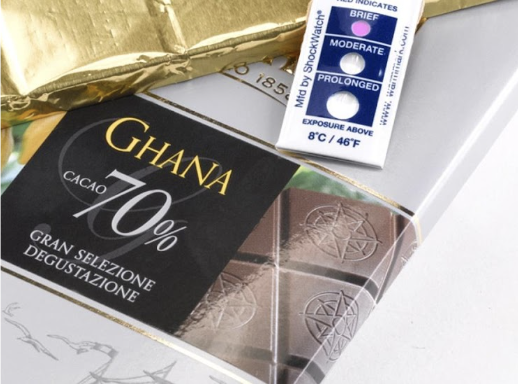
Time-temperature indicators (TTIs) monitor detrimental temperature changes—such as deviations above or below a critical reference value—along the food supply chain over time. These indicators provide visual, qualitative (or semi-quantitative) information about the package food—like on the chocolate packaging above.
The operating principle of this indicator relies on specific mechanical, chemical, electrochemical, enzymatic, or microbiological changes, typically expressed as a visible response in the form of:
Mechanical deformation
Color development
Color movement
Freshness Indicators
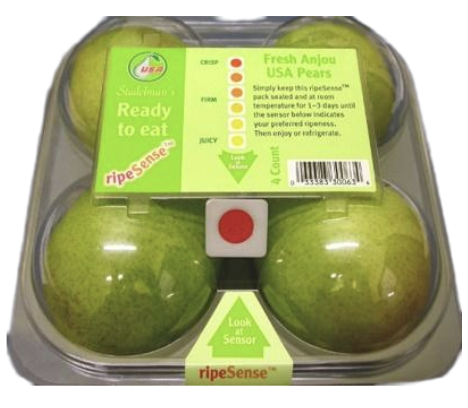
Freshness indicators—like on the pear packaging above—monitor the quality of food products throughout storage, transportation, and at the point of purchase. They provide direct, visible information about product condition related to microbial growth or chemical changes.
The example above highlights ripeSense indicators. The indicator shows red, letting customers know the pears are currently “crisp.” This sensor will change as the pears age either at the retail environment or consumer shelves.
Gas Indicators
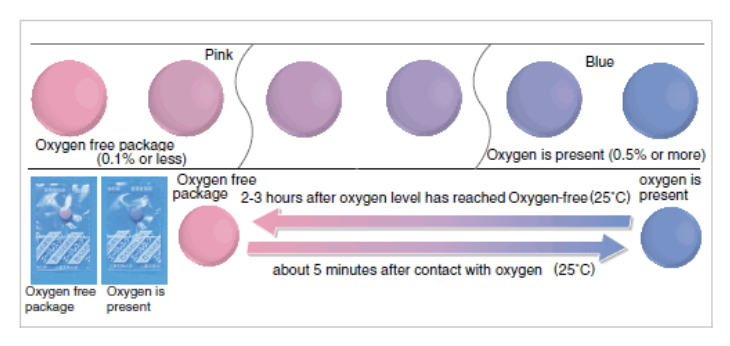
Similar to freshness indicators, gas indicators are placed inside the packaging to monitor any changes in its atmosphere. Essentially, they are used to either assess the efficacy of active packaging components (e.g., oxygen and carbon dioxide scavengers) or to detect the occurrence of gas leakages.
Since these indicators are stored inside the packaging itself, they must be both non-water soluble and non-toxic.
QR Codes
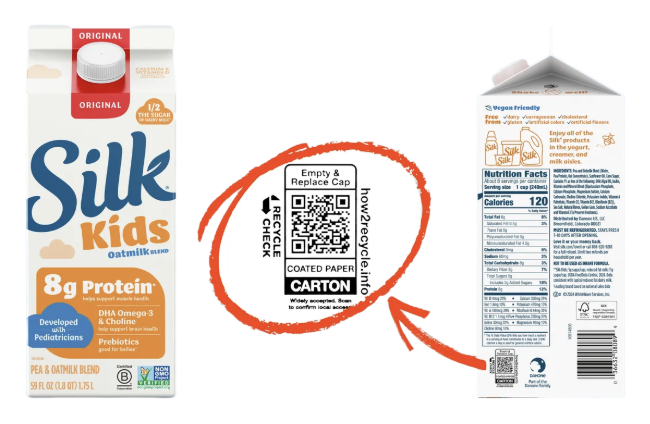
QR (quick response) codes are a form of intelligent packaging used to communicate key information to consumers at the point of purchase or time of disposal.
The image above shows a How2Recycle Plus logo on a Silk brand carton. When consumers scan the QR code, they learn whether the packaging is recyclable in their jurisdiction or not, leveraging a database by The Recycling Partnership. The system was piloted in October 2024 and has expanded to other brands since—read more here.
Near Field Communication (NFC)
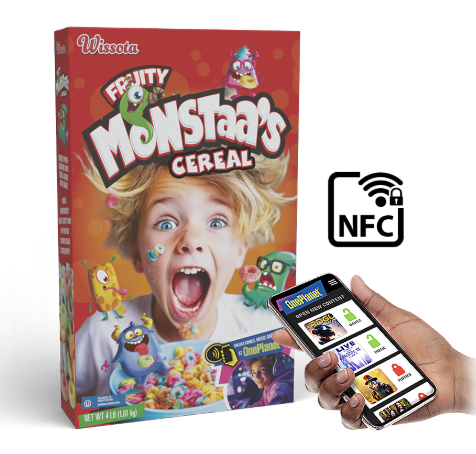
Near field communication (NFC) is a form of contactless communication between devices like smartphones and tablets. Contactless communication allows a user to simply wave their smartphone over an NFC compatible device (or package) to receive information; the devices don’t touch, and the consumer doesn’t have to go through multiple steps.
Companies—like Graphic Packaging who created the NFC cereal box above—are beginning to use this tech for product packaging. It allows them to better communicate with potential customers at the point of purchase and creates new paths for engagement.
Augmented Reality (AR)
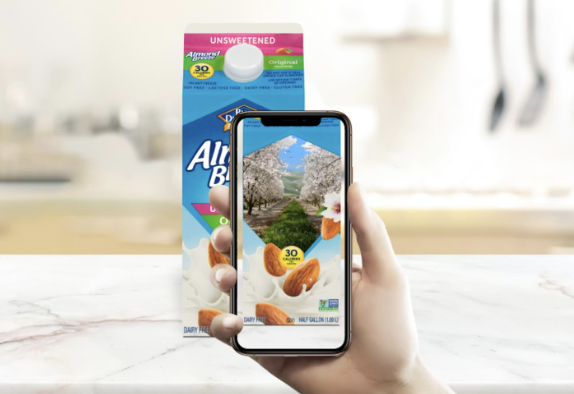
Augmented reality (AR) can be found in packaging, enabling consumers to enjoy custom websites and brand experiences when they scan QR codes on packaging.
The example above is from Almond Breeze milk by Blue Diamond—who partnered with Tactic in 2021 to bring consumers an AR experience showing how cooperative growers in California create almond milk. When consumers scan the QR code on pack, they can view a miniature AR farm and explore Almond Breeze’s supply chain.
Interested in learning more about AR solutions for packaging? Check out our free online course here.
Design Your Own Active or Intelligent Packaging
Now that you have learned about 12 different active and intelligent packaging solutions, you might be wondering if you should be applying these solutions to your organization's packaging systems!
If so, you can explore how to accomplish this in our online, PhD-led Certificate of Mastery in Packaging Management (CMPM) program!
A key part of the program is a 12-week long Packaging Development Plan (PDP)—a project that guides students in creating a packaging innovation through a 10-phase packaging development template.
For example, your PDP project could entail creating a packaging management plan and prototype for a new fruit packaging system with an ethylene scavenger that will extend shelf life and reduce unnecessary food waste—thus aligning with your organization's sustainability goals. Or you could explore how to use augmented reality (AR) technology to connect with consumers at the point of purchase and tell your product’s story.
No matter your goal, the PDP provides a framework and guidance for how to bring a new innovation from the drawing board into the hands of consumers.
Learn more about Yajssel Gudiño Vigil’s PDP project—a Technical Account Manager at Smurfit Westrock—that explored how to implement an AR experience for Nature’s Bakery packaging here.
Interested in exploring the PDP and CMPM? Book a call with our program director—Dr. Julie Rice Suggs—here.
By signing up you indicate you have read and agree to our Terms of Use. Packaging School will always respect your privacy.
