
FIFA World Cup Ball Packaging Analysis
Alli Keigley: The FIFA World Cup is approaching quickly, and if you didn't know, it will be taking place here in North America. While no games will be hosted in our home state of South Carolina, 16 major cities across the United States, Canada, and Mexico will host 104 games between July 11th and July 19th, 2026.
We're very excited to watch the games, but we're also excited about packaging.
And so, we decided to analyze the materials and packaging for the match ball that can be bought by the general public, the Trionda by Adidas.
Learning Objectives
In this video, we'll:
Examine the materials used in the 2026 match ball
Identify the primary and secondary packaging components used for the ball
Evaluate the recyclability and sustainability performance of the packaging system
Interpret life cycle assessment (or LCA) results using the Trayak platform
Trionda Ball & Materials
Here it is—the 2026 World Cup game ball, the Trionda:
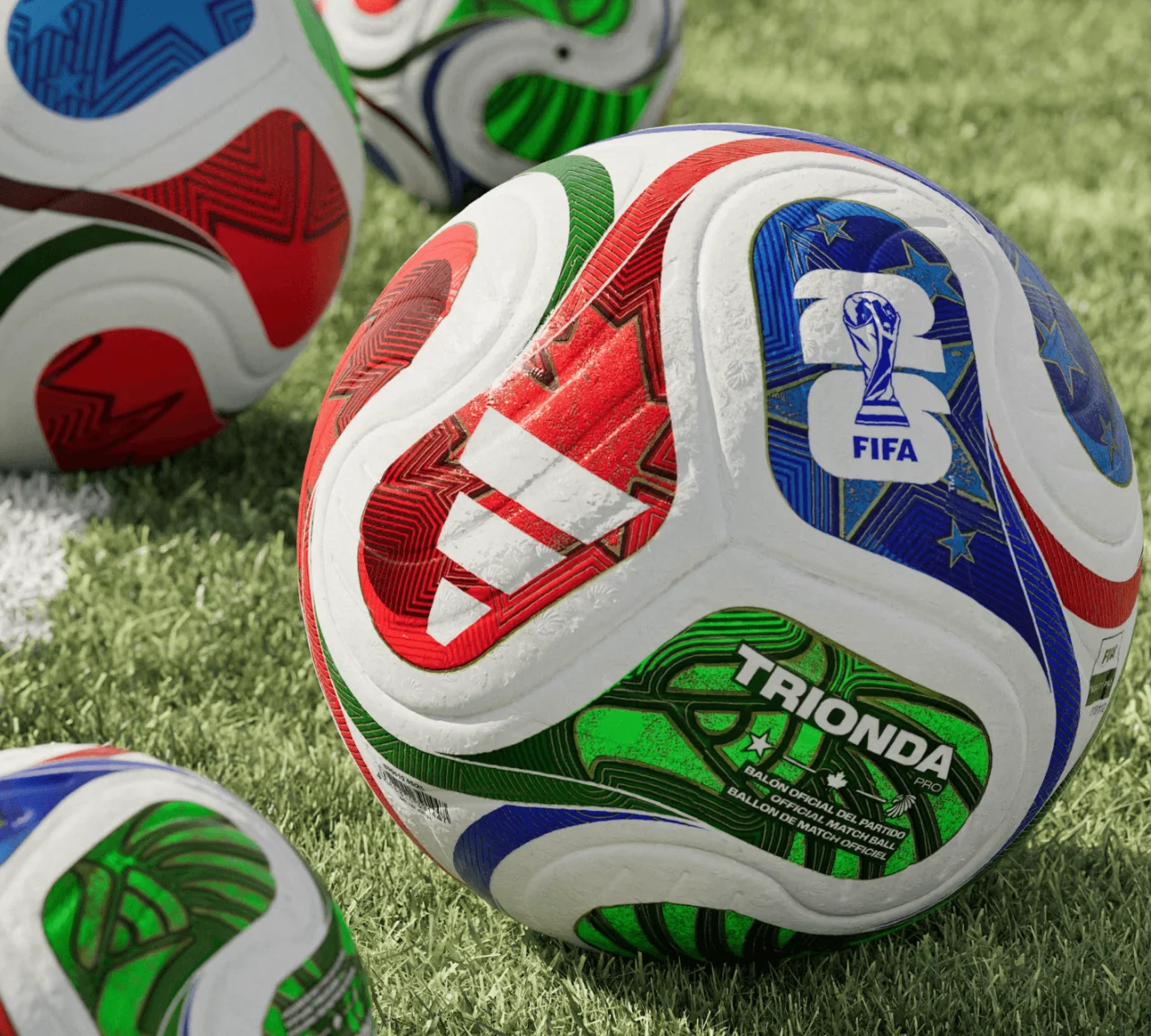
Adidas.com claims the Pro ball is made of 100% polyurethane that offers a thermally bonded seamless construction. Polyurethane is used for sports balls like the Trionda and other World Cup match balls due to its inherent properties like great flight characteristics, water resistance, and predictability, as compared to other plastic materials.
Now, let's check in with Nick to see how we unboxed our official 2026 World Cup game ball.
The Trionda Primary & Secondary Packaging Life Cycle Assessment (LCA)
Secondary Packaging
Nick Riedl: Thanks, Alli.
If you order the Trionda online, it will likely be pre-inflated, packaged in something like this—a standard, recyclable corrugated fiberboard box, fulfilling the secondary packaging role.
So, let's open this up and see what we have inside.
Since we're going to run a small life cycle assessment (LCA) on the packaging system used for the Trionda, let's weigh the box.
As you can see, the box weighs 368 grams, or 0.81 pounds.
Primary Packaging
Now, let's take a look at the primary packaging.
As we mentioned, the Trionda ships pre-inflated and is packaged in a branded combined paperboard corrugated sleeve that keeps the ball stable during shipping.
Since we plan to plug it into an LCA software, let's weigh the primary packaging.
The primary packaging is 174 grams, or about 0.38 pounds.
Now, let's take a closer look at the primary packaging, and we had to scratch our heads a bit and consult some of the team to make sense of it all.
While PAP 20 is technically the appropriate designation for corrugated fiberboard, some packaging systems containing microflute or hybrid paperboard corrugated construction may still be labeled PAP 21 in practice due to classification ambiguity and differing market interpretations.
This is where things get a little interesting, because although the structure clearly shows a fluted profile, that alone doesn't always map cleanly to a PAP 20 classification in real-world packaging applications.
The coated nature of the microflute enables high-quality print and premium graphics, while still maintaining recyclability within the paper waste stream.
As a result, certain coated microflute constructions may be classified more like engineered paperboard than traditional corrugated packaging—leading to PAP 21 classification, despite the presence of fluting.
From our analysis, it should be curbside recyclable like the secondary packaging. But as always, check local acceptance before recycling.
This focus on recycled packaging for the Trionda is in line with Adidas's broader materials and packaging goals. You can learn more about their packaging and broader sustainability targets here.
It's important to note that if you buy the Trionda in person at an Adidas store or sports store, you'll likely find the ball in just its primary packaging or, in some cases, with no packaging at all, stored in a bin.
Life Cycle Assessment (LCA) Results
Since we were able to weigh the packaging and make assumptions about the materials, we ran a quick life cycle assessment (LCA) on Trayak’s EcoImpact COMPASS LCA software.
An LCA is a methodology used to quantify the environmental impacts of a product or packaging system, often from cradle (raw material extraction) to grave (end of life).
LCAs for packaging are becoming increasingly popular in numerous industries for design, R&D, and regulatory compliance initiatives.
For this analysis, we focused solely on the materials for the primary and secondary packaging, since we don't have insight into the manufacturing process. Larger LCAs often take into account 10 to 15 different environmental impacts, but for this case, we just focused on greenhouse gas emissions and water consumption.
Here are the main inputs into the LCA.
Let's start with the global warming potential (or GWP) impacts of the primary and secondary packaging.
If you aren't familiar, in an LCA, global warming potential is an impact category that groups the emissions and climate change impacts related to packaging systems to one metric—converting different emissions sources into a carbon dioxide equivalent (CO2e) to represent a total emissions impact.
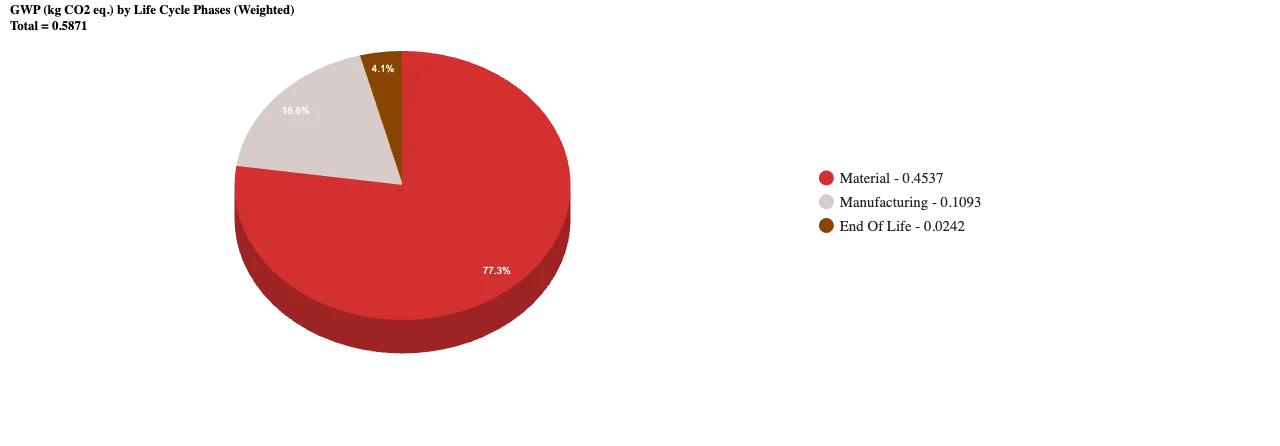
The total GWP impact of the primary and secondary packaging system is 0.5871 kg of CO2e.
The LCA tool also breaks down this impact into three key stages: material, manufacturing, and end of life—think disposal or recycling.
This chart shows the breakdown:
So, you might be wondering what does 0.5871 kg of CO2e even mean?
That's where equivalencies come into play, and Trayak generates these automatically when you run a report.
So in a real world example, the greenhouse gas impact of the primary and secondary packaging for the Trionda ball is equivalent to driving a car for about 1.4 miles or 2.3 kilometers, or about 1 cup of gasoline.
Next, let's explore the water use, called water consumption, or scarcity in Trayak, of the primary and secondary packaging.
This impact category measures the potential of a packaging system to deplete freshwater resources, with a focus on how scarce water is in the regions where packaging materials are produced.
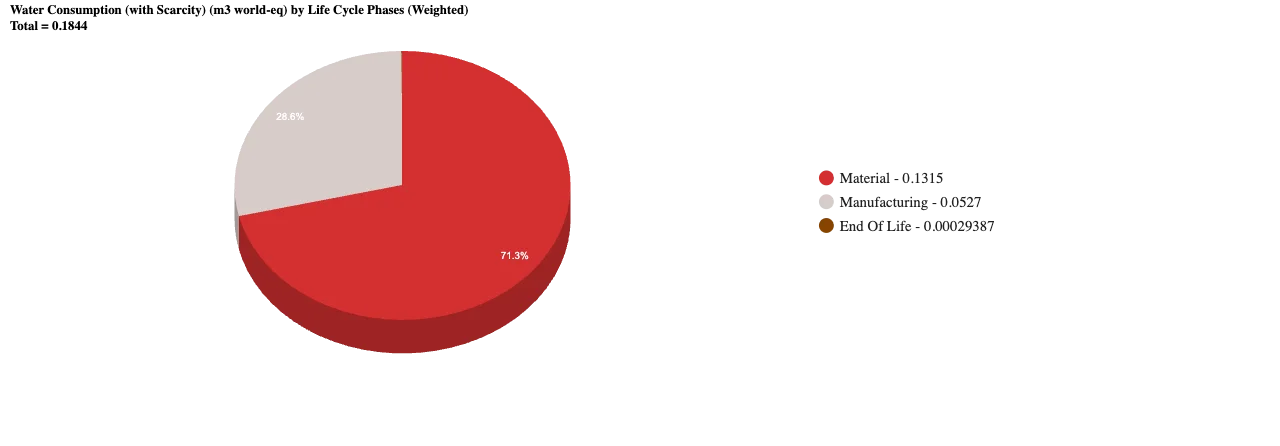
The total water consumption impact for the primary and secondary packaging of the Trionda is 0.188 cubic meters world equivalent (0.188 m3 world eq).
Similar to GWP findings, Trayak breaks this down into three life cycle stages:
Now, let's look at the equivalencies to grasp the 0.188 m3 world eq water consumption impact.
One key finding shows the water footprint of the primary and secondary packaging systems is equivalent to nearly 3 average showers or about 48 gallons of water.
A full LCA would evaluate additional impacts like resource use, land change, eutrophication, and more.
But we're keeping it simple with greenhouse gas emissions and water use for this video.
Conclusion
Alli Keigley: Thank you for joining us as we unpacked the design and sustainability behind the World Cup ball and its packaging system.
As the games kick off next week, we encourage you to reflect on the role of packaging and supply chains in major sporting events like the FIFA 2026 World Cup. Hey, maybe you could even nerd out and explain things you learned in this video at watch parties.
The Packaging School team wishes the best for the US men's national team and hopes you enjoy the games.
By signing up you indicate you have read and agree to our Terms of Use. Packaging School will always respect your privacy.
