
Exploring Coffee Packaging with Methodical Coffee
Alli Keigley (Packaging School Production Coordinator):
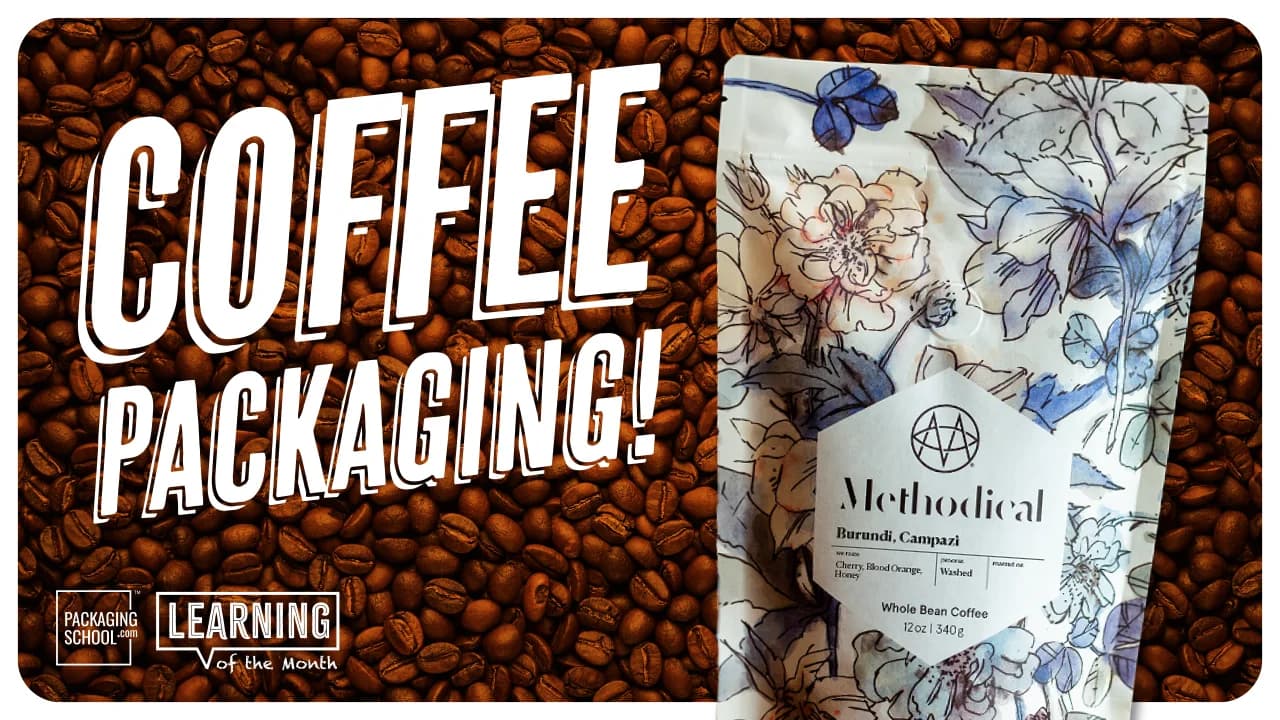
This month, The Packaging School team traveled to Travelers Rest, just a bit down the road for some of us, to visit the roasting and distribution center for Methodical Coffee.
As a coffee lover, I was especially excited for this visit, and even more so because one of my daughters works at their beautiful new location in Columbia, SC. We're going to explore their entire coffee process, and of course, pay close attention to how their expertly crafted coffee is packaged. Let's jump right in.
Will Shurtz (Co-Owner of Methodical Coffee):
Methodical Coffee has been open for eleven years now. We knew we wanted it to be a specialty coffee company, which puts emphasis on the origins of coffee and treating coffee as more of a refined product than just an ingredient in something sweet—which it is still an ingredient in something sweet, and I like that. But specialty coffee emphasizes the more intricate complexities of coffee, and we wanted to bring that to Greenville.
We contract coffee from the farmers, from the cooperatives, through a coffee importer, but it doesn't stop there. Because coffee quality is hugely dependent on what it's being stored in and how it is being stored.
And so, traditionally, coffee would come in a burlap bag. But some years ago, maybe it's like fifteen or so years ago, it's stored in GrainPro. And it's a plastic liner inside the burlap bag, and it helps protect the coffee from odors or moisture or anything in the environment that we don't want coffee exposed to—whereas burlap kind of lets things in and out.
And then also, it needs to be stored in a temperature and humidity stable environment. So, it goes from the ocean, which the burlap bag does a lot of protecting when it's on the ocean, because you don't know what it's going to be coming across, or the heat, or the humidity, or anything. But then it gets to an environment that's safe in Charleston or New Jersey, and then it comes to our roastery, and we have a climate-controlled room where we store our green coffee or our unroasted coffee.
At any given time, in our own facility here, we will be storing about 40,000 to 60,000 pounds of coffee. As I'm talking today, we're roasting between 12,000 and 15,000 pounds of coffee a week. And so, we try to keep at least a month's worth of coffee on hand.
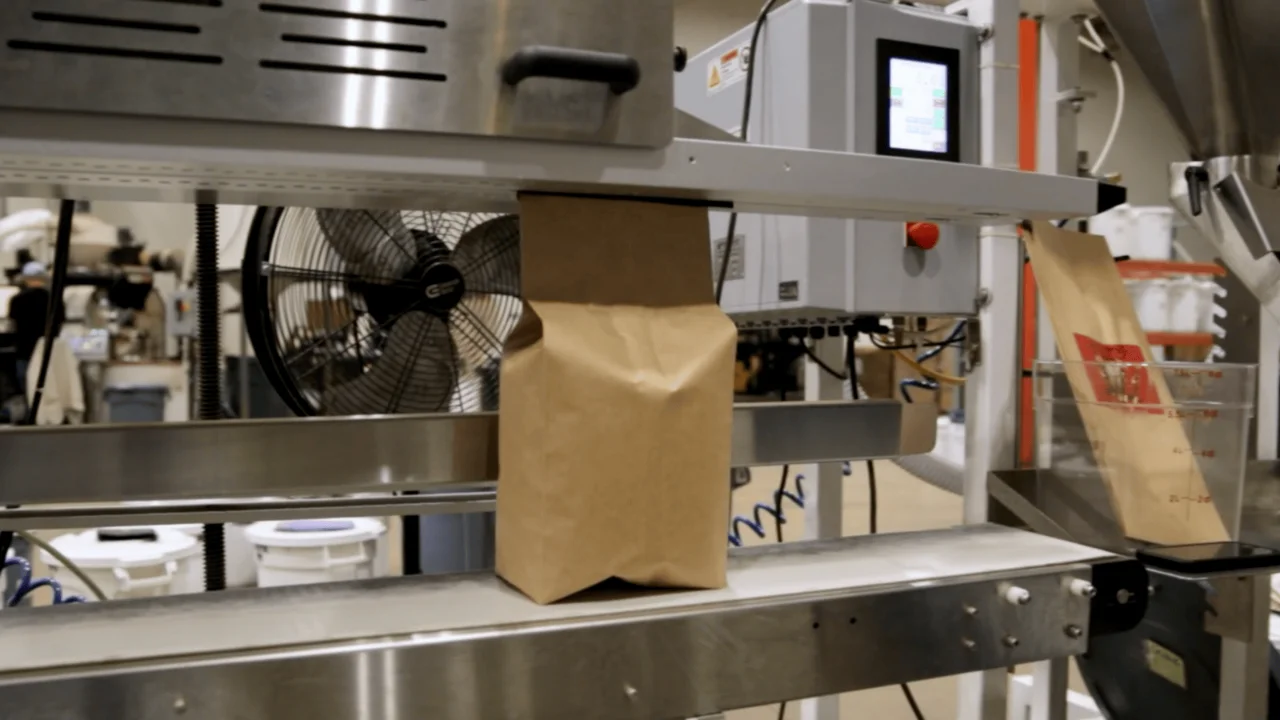
At the beginning of the day, all the orders come in. The roasters see how many pounds of each coffee need to be roasted, and then the production team sees how many bags of each size bag of each variant of coffee need to be labeled and filled today. And so you'll see this rack that is just holding hundreds, sometimes thousands of bags every morning, and those are the bags that need to be filled.
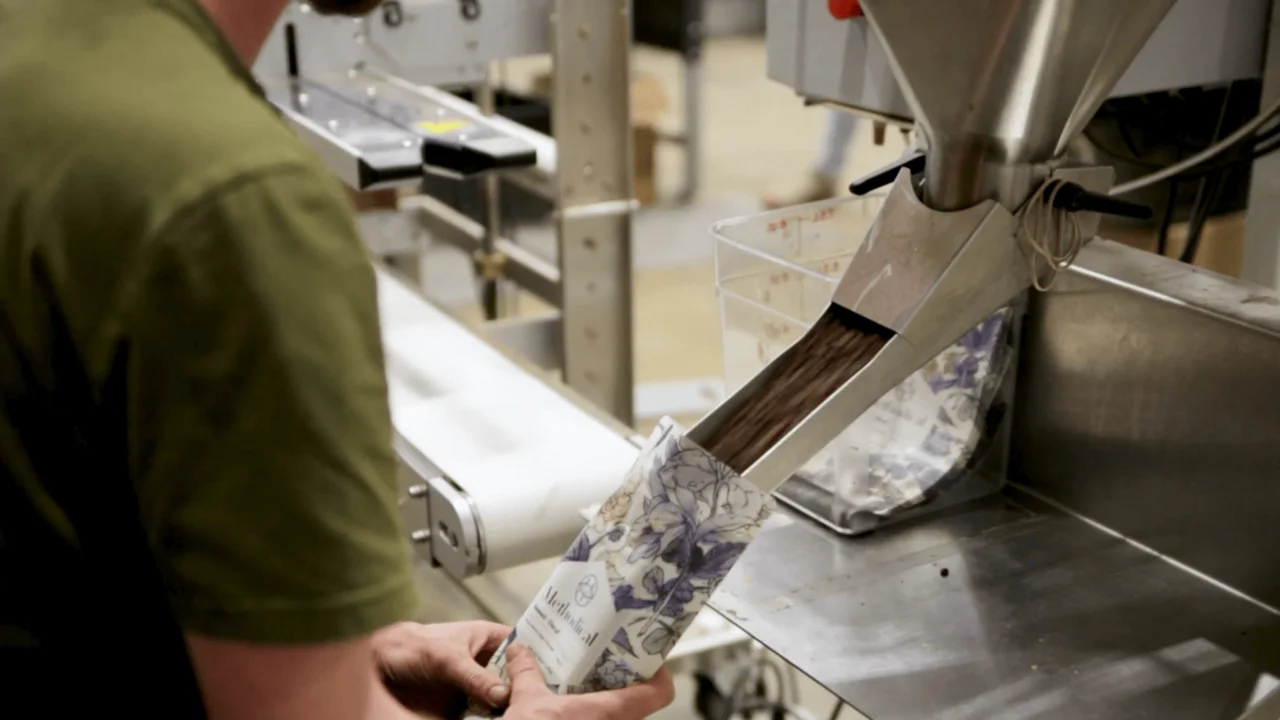
We used to fill all of our coffee bags by hand, and we have different variants of bags. We have 12-ounce, 2-pound, and 5-pound bags, most commonly. We got these weigh / fill machines, and these weigh / fill machines have a hose and a pneumatic loader where we put the hose in the bucket of coffee that we just roasted. The hose sucks the coffee up and puts it into this funnel. It weighs out the coffee for us, and then we press a foot pedal on the floor, and it drops the coffee into the bag that we have underneath the funnel. And then once that coffee is dropped into the bag, it's placed on a bag sealer right away, so that the bag is sealed up.
They're put in these gray, stackable, reusable bins—and this is the way that we store all of our coffee here at the roastery. And we also use these gray bins to deliver to some local delivery spots, especially our own cafes. We use them to unload them, and we stack them up and bring them back to the roastery. It's really easy—so we don't have to go through as many corrugated boxes. But if we're shipping coffee out or bringing coffee a little bit further out of town, then yeah, the coffees will go into corrugated boxes.
Methodical's Commercially Compostable Bags
In the past couple of years, we started using a bag from a company called Biotrē™, and Biotrē™ produces bags that are commercially compostable.
There's this conversation to be had in the coffee industry where, do you use bags that might be more sustainable for the Earth, but they let more oxygen in, you know, because they're a little more breathable, and maybe the coffee might oxidize a little quicker?
Or do you use more, some would say, sturdy bags, or plastic-lined bags, or foil-lined bags. Maybe they don't let as much oxygen into the bag, but there's a give and take for both of them.
Coffee Freshness Considerations
And so the conversation is, how long does coffee need to be fresh in a bag?
Coffee is usually consumed within two months after someone gets it in their 12-ounce bags.
If I'm getting a 12-ounce bag, I consume the coffee probably in a week. And so we want to find the right packaging that is still beautiful, healthier for the environment, but also, it doesn't need to last forever, you know. It needs to last for the amount of time that the coffee is in the bag. And so for these 12-ounce bags, we decided to go with these Biotrē™ commercially compostable bags.
And so on these bags, you will see a little valve on the front or on the back of the bag, and that's usually the valve where you grab the bag at the grocery store, and you squeeze the bag, and you kind of smell all the coffee aromatics come out. But that valve is there to let CO2 out of the bag without letting oxygen into the bag.
Right after the coffee's roasted, the coffee's going through what's called a degassing phase.
So for about 15 days, maybe a little bit longer, it is continuously releasing the CO2 that was built up during the roasting process. So that's why you'll see bags kind of blown up sometimes on the shelf, and you squeeze it, and all that comes out. So that's mainly CO2. And so you need those valves to let the CO2 out, or else too much buildup of CO2 in the bag will make the bag pop if it didn't have a way to get out.
You know, there is a lot of marketing that goes around saying, like, "fresh is best," "the day of," or "the day after it's roasted"—that's the freshest and the best way to drink your coffee. When in reality, that's when the coffee has the most buildup of carbon dioxide. And carbon dioxide, it actually kind of hinders your ability to taste certain complexities and certain sweetness in the coffee.
So, allowing the carbon dioxide to degas from the coffee before you start drinking it, allows you to taste the coffee more fully.
Alli Keigley:
We'd like to thank Will Shurtz and the team here at Methodical for letting us explore their coffee process from roasting to packaging.
As always, if you would like more educational content related to packaging, please go to our website, packaging school.com, and subscribe to us on YouTube.
By signing up you indicate you have read and agree to our Terms of Use. Packaging School will always respect your privacy.
