
More Than a Crate!
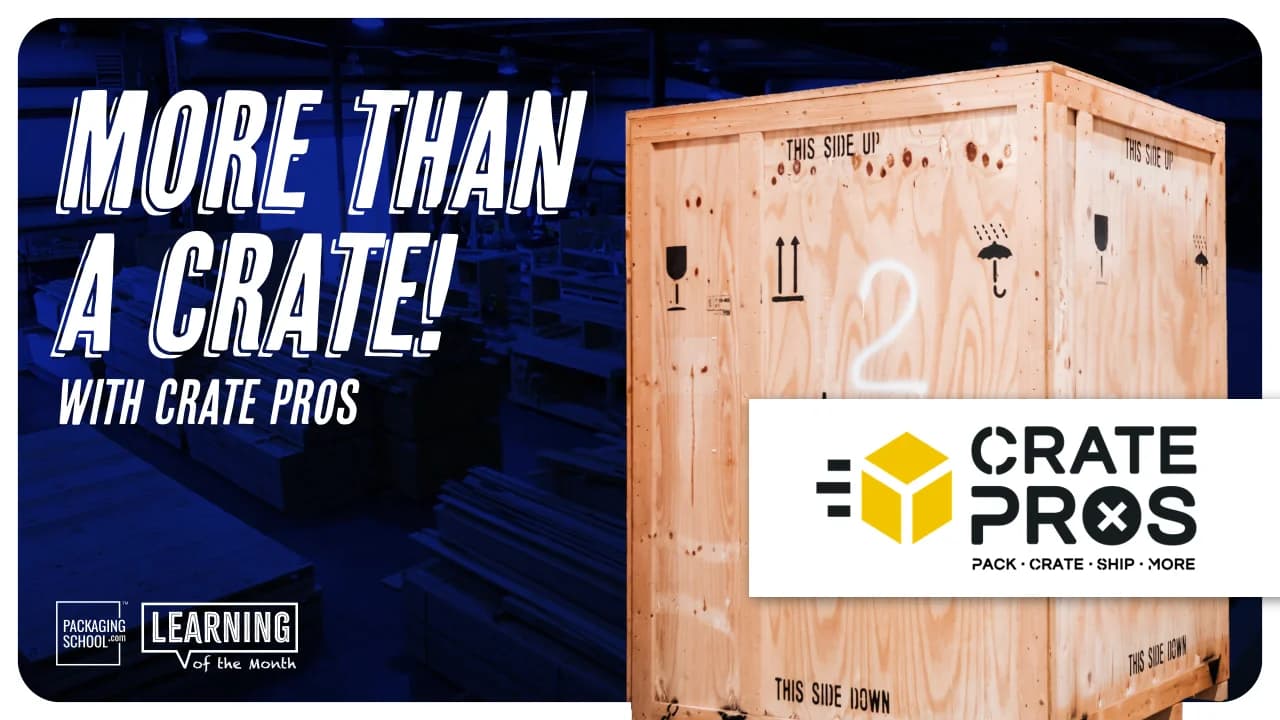
Nick Reidl: Protective packaging is essential for ensuring products arrive safely—especially when dealing with large, delicate, or high-value items like those found in the automotive industry.
This month, we had the opportunity to travel to Chattanooga, Tennessee, where we met with Crate Pros and Arplank Direct. During the visit, we explored their operations, gained insights into custom crating processes, and learned how engineered foam materials—like those produced by Arplank Direct—are transforming protective packaging solutions across industries.
Joshua Shaw: Welcome to Crate Pros. Today, we’re talking about designing custom packaging solutions—from first conversation to final product.
Nick Reidl: By the end of this lesson, you will be able to:
Analyze how discovery and customer context inform custom packaging design
Evaluate how material selection impacts performance, efficiency, and sustainability
Examine how rapid prototyping influences client feedback and accelerates decision-making
Identify the key steps required to move a packaging solution from concept to execution quickly
Joshua Shaw: When a customer comes to us, they’re usually facing a constraint—tight timelines, new parts, limited storage. They’re not just asking for a crate; they’re asking for a solution. That process always starts with listening.
We start by gathering context. How the part’s handled? Where does it go next? What matters to the install team? Every answer shapes what the packaging needs to do—often beyond just “protecting” something.
Once we’ve gathered the right data, we move on to the design phase. This is where CAD—or Computer-Aided Design—comes in. It allows us to create precise digital models of both the part and the packaging.
With CAD, we can simulate how the part fits, how it moves inside the crate, and how the crate itself will stack, load, and perform under stress. It helps us anticipate issues before they show up on the floor, which saves time and money.
Chris Harrod: When Crate Pros came to us at ArPlank, they needed a foam that checked a lot of boxes: clean cuts, durability, and a smaller environmental footprint. EPE delivers that—it’s consistent, easy to fabricate, and recyclable.
EPE is ideal for expendable export packs, handheld returnables, and Class A applications for high-value automotive parts and sensitive electronics. As a fully recyclable thermoplastic, it supports a circular economy by being melt re-processable. With 40% less mass and material required—while delivering the same protection—it reduces fuel consumption, lowers CO₂ emissions, and keeps over 94,000 pounds of plastic out of the automotive dunnage supply chain each month.
There are many key areas where this material is commonly used, such Interior and exterior Class A protection, carpet stiffeners and levelers, and cushion pallets—and many more across automotive, energy storage, and packaging applications.
Interior and exterior Class A
Carpet stiffeners and levelers
Headliner stand-off blocks
EV Battery crate liners
Cushion Pallets
Stuffer pads
Road noise barrier
NVH Solutions with energy management
Facia
Radiator
Windshield
Roof Racks
Air Dam
Custom wheels
Head lamp assemblies
Brake assemblies
Strut assemblies
Lithium-ion Batteries
Crating for (DDR) Damaged, Defective & Recalled batteries.
EPP CH-FR for battery programs
Non-combustible, cushion material for batteries.
Passes UL-94 HF1 and V0; Yellow Card on file
Passes DOT torch test and UN package testing
Energy Storage/Rail/Marine/Ag/Recreational Vehicles
Joshua Shaw: EPE foam has allowed us to move away from cross-linked foams, delivering cleaner results, faster turnaround, and a greater peace of mind with a more sustainable material. It also contributed to supply chain cost reduction—offering the same level of protection with lighter weight, lower shipping class, and reduced material costs compared to XLPE.
Once the design is clear, we move quickly on to prototyping. Building a physical version early lets the customer engage with it directly—to see how the parts fit, test handle, and offer real-time feedback.
Chris Harrod: This kind of rapid iteration is a key part of the process. Instead of waiting weeks for a final version, you get a working prototype in just a few days. That accelerates decision-making and often surfaces improvements that wouldn’t be obvious on a screen.
Joshua Shaw: Prototyping isn't the finish line—it's part of refining the solution. The sooner we can test, the sooner we can adapt, and that makes the final outcome stronger.
Tim Slicker: We don’t just respond to specs—we often help our customers define them through our in-house engineering capabilities. Working closely with customers gives us the context to develop practical solutions, especially when traditional ones fall short.
With automotive parts supply shortages caused by COVID, OEM manufacturers needed suppliers to keep larger safety supplies of parts to prevent line shutdowns. With long lead times and significant investment in steel racking, we helped them pivot to wood-based alternatives that could be produced and delivered faster—without sacrificing durability or function in the container. And it prevented them from having expensive steel racking sitting idle in safety stockage supply.
Today, our work includes projects from Tier 1 to OEM manufacturers ranging from Kentucky to Tennessee to Alabama and Georgia. We focus on real-world, responsive solutions to their tough packaging challenges.
Joshua Shaw: Here’s an example: a sensitive component that needed to arrive undamaged and be stored efficiently in a warehouse setting. By combining foam with a carefully planned crate layout, we met both requirements effectively.
CONCLUSION
Joshua Shaw: It’s not just about what we build. It’s about how we get there—starting with questions, staying flexible, and focusing on the end user
Chris Harrod: When everyone’s aligned, the packaging becomes part of the product’s success.
TimSlicker:It’s not just a crate. It’s a solution that provides you peace of mind. And that’s where the value lies.
By signing up you indicate you have read and agree to our Terms of Use. Packaging School will always respect your privacy.
