
How Kellogg's, Xbox, and Müller Yogurt Are Revolutionizing Packaging Accessibility
Part of our larger Packaging Innovation Dashboard.
Xbox | Packaging for Adaptive Joystick & Consoles
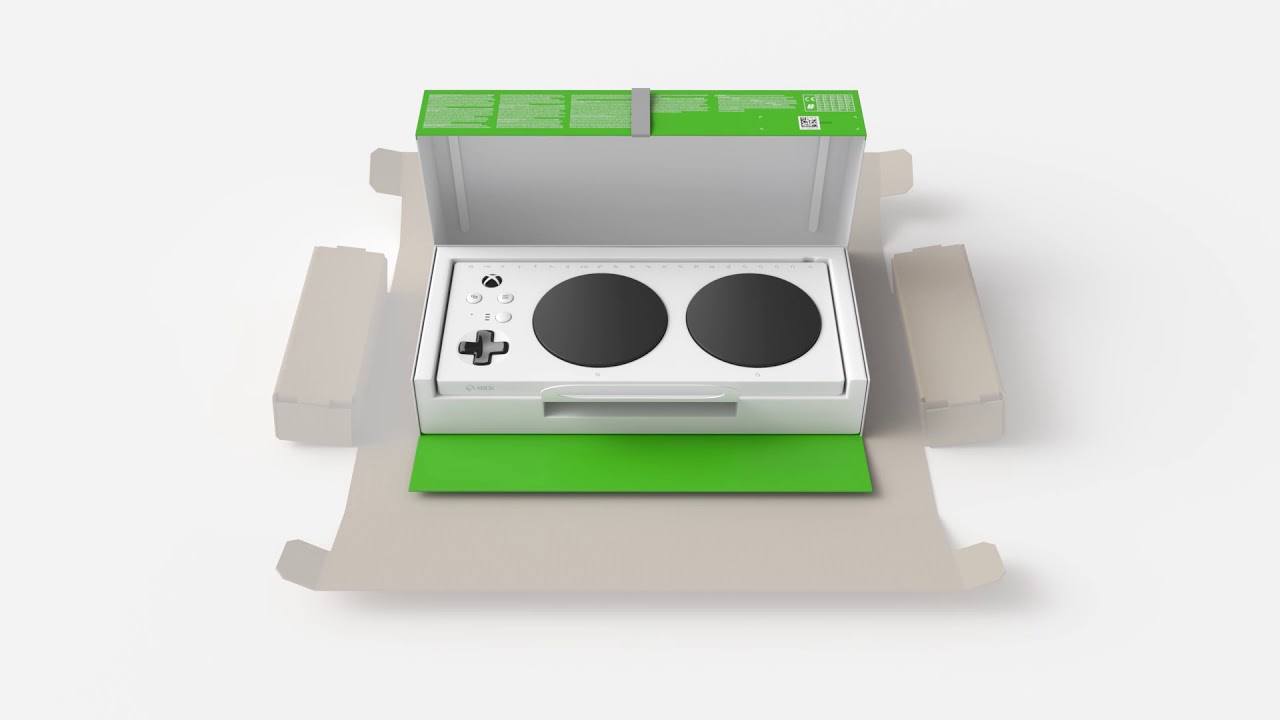
Photo from Microsoft
Did you know that Xbox, a Microsoft company, has the goal of making “gaming accessible for more than 425 million players with disabilities worldwide”?
To support this goal, Xbox recently released a number of product and packaging updates—including the Adaptive Joystick designed for players with limited-mobility that can be “controlled with one hand, mounted via tabletops, or used with non-hand body parts.”
For the packaging, Forbes reports that Xbox has released new accessible packaging for consoles and the new Adaptive Joystick. In order to optimize designs, Xbox’s packaging design team engaged with the disability community to learn more about their needs. As a result, the accessible packaging includes elements like a “hinged box lid, large loops, and no twist ties for cables.”
In an Xbox blog post from August, Xbox elaborated on the accessible packaging features for consoles and the Adaptive Joystick, including:
A center-seamed shipper with looped tape to facilitate retail packaging removal
A large base-tab to prompt an uncomplicated out-of-box experience
A hinged box lid, with larger loop attached for product access
Ample space around the product to assist with removal
A large loop for seamless cable folio access
No twist ties on cables for simple handling
Read more on how Xbox is using packaging as a vessel to advance accessibility in gaming here.
Story from Forbes
Kellogg's | NaviLens Tech on Cereal Boxes in USA
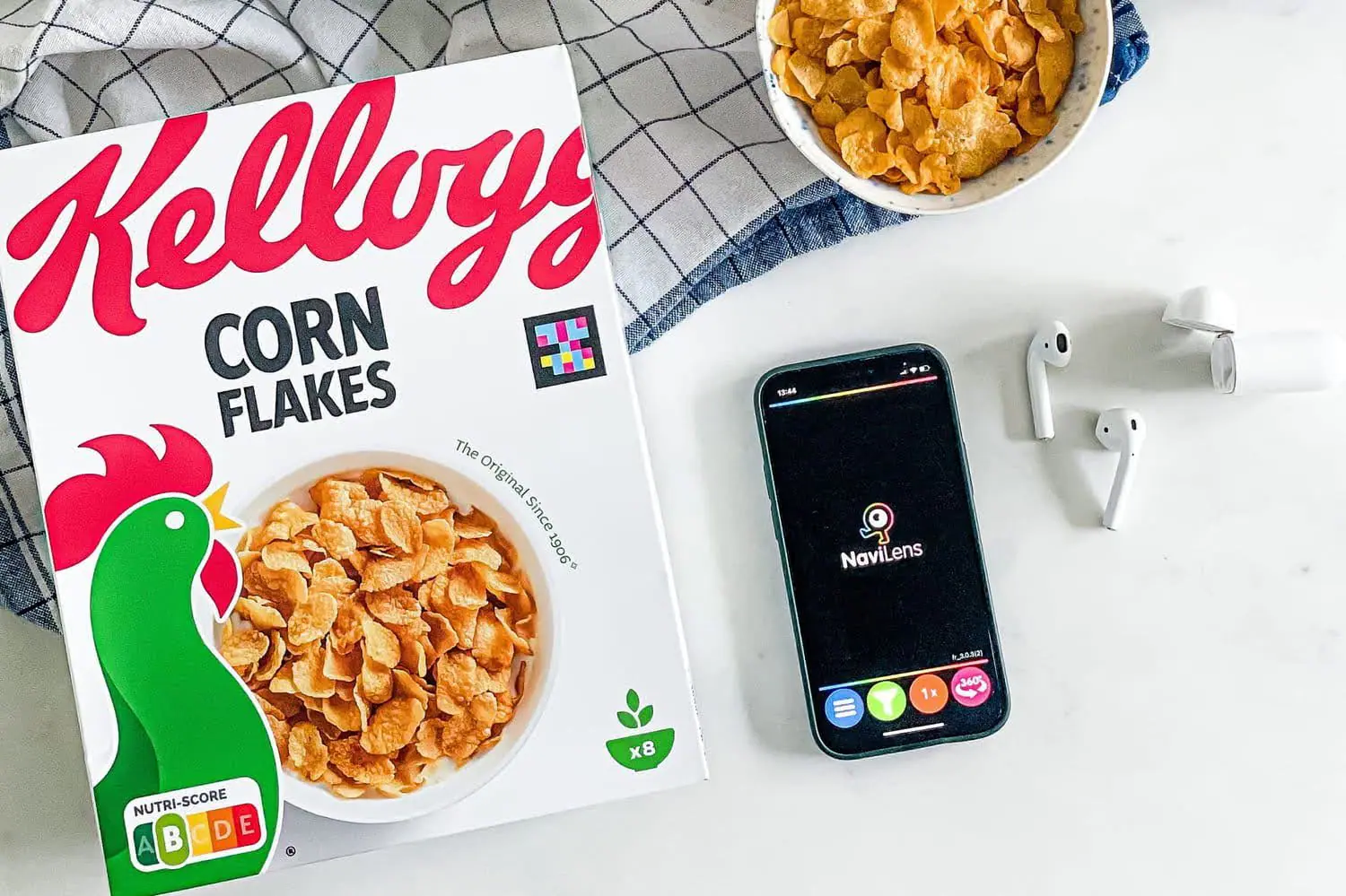
Photo from The Blind Guide
In December of 2022, Packaging World reported that Kellogg’s became the first food company in the United States to implement NaviLens technology on its Kellogg’s Corn Flakes, Special K, Rice Krispies, and Crispix packaging.
NaviLens provided Kellogg’s with an “optical smart code compromising high-contrast colorful squares on a black background that can be detected and read by the NaviLens and NaviLens GO Apps,” helping the 12 million adults in the United States who have low vision or are blind. The technology enables blind and partially sighted folks to locate the boxes, hear their names, size, nutritional info, and other vital information.
The move follows a successful pilot in Europe and is part of Kellogg’s wider ESG strategy, under the Better Days Promise. The purpose of Better Days Promise is to provide “sustainable and equitable food access.”
Charisse Hughes, the SVP Chief Growth Officer at Kellogg’s, was quoted in Packaging World, stating:
“We work hard to think outside the box to ensure our products are accessible to as many people as possible. Thanks to the hard work of our cross functional teams, we’re able to adapt and leverage this technology to ensure we’re living by our purpose—to create a place at the table for everyone.”
We will be tracking which other US brands adopt NaviLens tech and work to make their packaging and products more accessible—stay tuned for more packaging accessibility content.
Read the full story here.
Story from Packaging World
Müller Yogurts | NaviLens Tech on Dairy Packaging
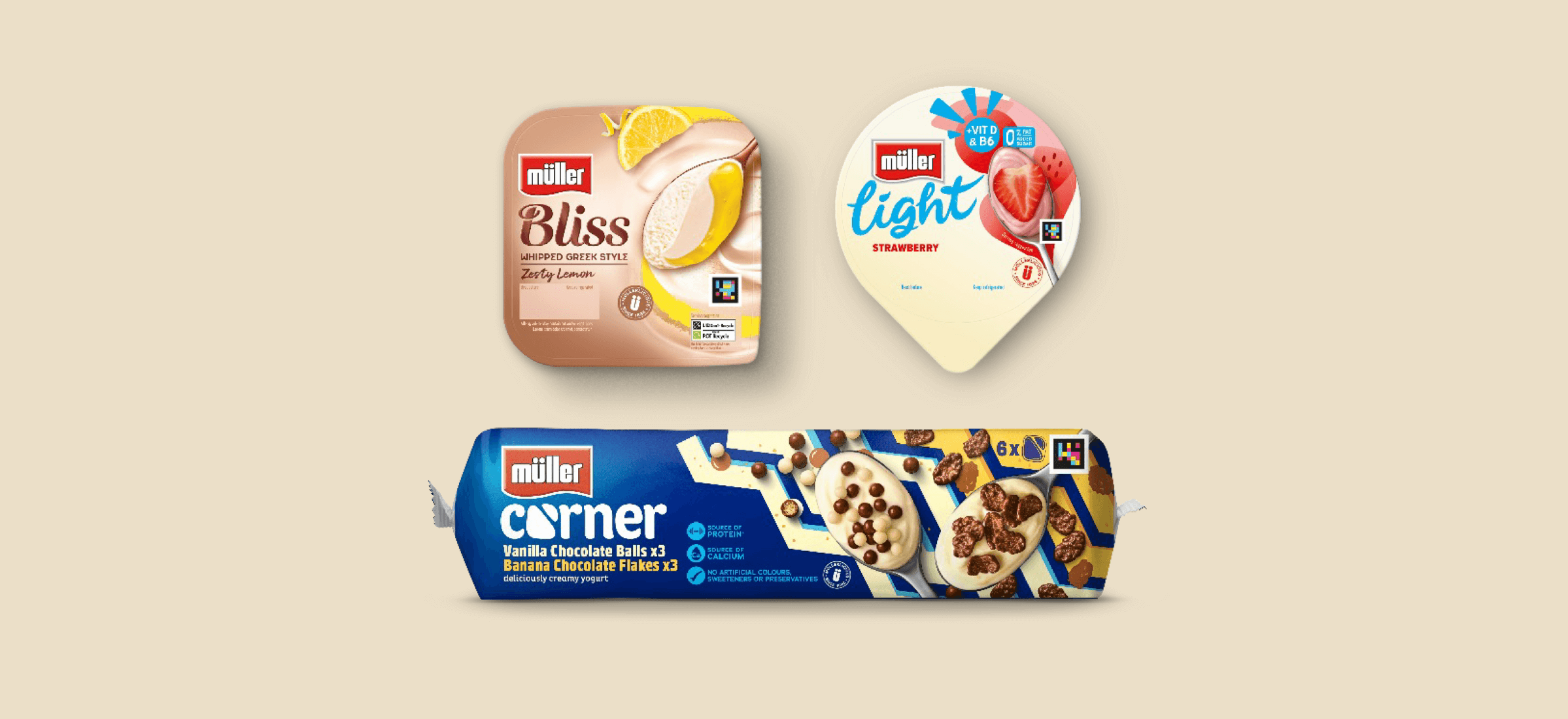
Photo from Packaging Suppliers Global
In Q3 of 2024, UK-based Müller Yogurts and Desserts became another firm to implement NaviLens codes and technology on their packaging to improve accessibility for blind and visually impaired folks, Packaging Gateway reports.
According to the European Blind Union, 1 in 30 Europeans (about 30 million people) identify as blind or partially sighted (BPS)—meaning more organizations need to work to implement NaviLens and related technologies, like Müller and Kellogg’s. With this partnership, Müller became the first company in the dairy industry in the UK to use NaviLens to aid BPS consumers in retail and home environments.
Richard Williams, the CEO at Müller, was quoted in Packaging Gateway, stating:
“The innovative and life-changing technology offered by NaviLens helps those with visual impairments overcome issues which others may never consider. By working with NaviLens, and raising awareness through our upcoming campaign, we hope to help encourage inclusivity, make the category more accessible for all shoppers, and ensure we achieve our purpose of putting a smile on the nation’s (UK) face.”
Similar to Kellogg's, Müller's work with NaviLens is part of its broader sustainability strategy. The company has taken this effort a step further by launching a PR campaign with the Sight Loss Council and other stakeholders to raise awareness of the challenges faced by blind and partially sighted shoppers.
Read more on Müller’s use of NaviLens on their dairy products here.
Story from Packaging Gateway
Learn More about Accessible Packaging Design
As Müller, Kellogg’s, and Xbox have demonstrated, packaging can be a vessel for brands to enhance accessibility and make the shopping and consumption experience more worthwhile for those with disabilities. What these three stories have in common is their focus on understanding the consumer experience and tailoring packaging designs to be more ergonomic, addressing the unmet needs of their target markets.
Learn more about designing ergonomic and effective packaging in our online Intro to Ergonomics in Packaging Design course. Explore the course here.
By signing up you indicate you have read and agree to our Terms of Use. Packaging School will always respect your privacy.
